


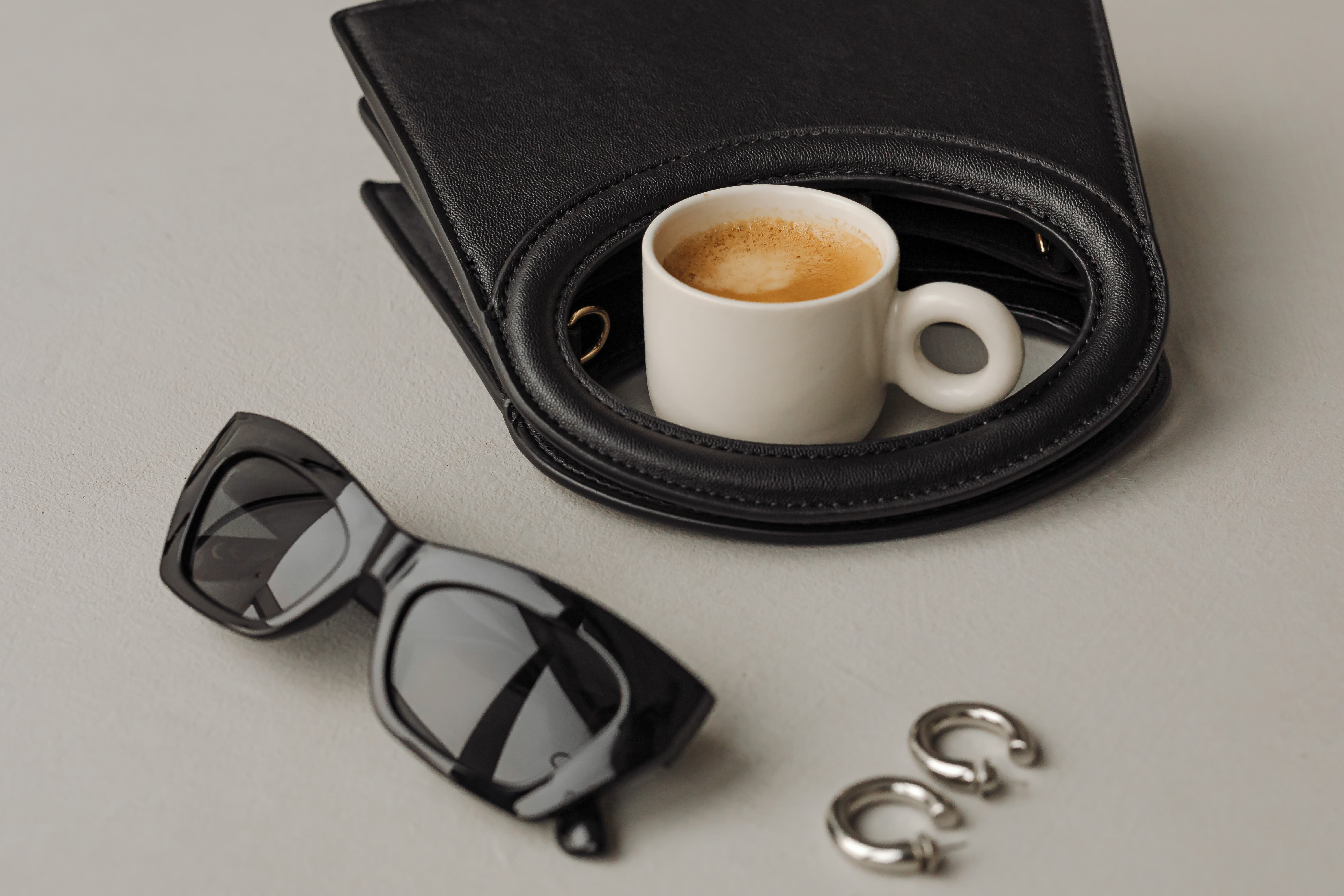
A black handbag, sunglasses and silver earrings form the kind of coordinated arrangement often associated with polished style. (Karolina Grabowska/Kaboompics)
There was a time when looking polished meant that nothing appeared accidental.
The hair was smooth. The shoes looked untouched. The bag matched the belt without matching it too obviously. Colors belonged to the same carefully controlled family. Every proportion had been corrected, every crease removed, every detail brought into agreement with the next.
This kind of polish still photographs well. It still signals effort, access, and an understanding of the rules. But it no longer guarantees style.
Across fashion and beauty, the most memorable looks now often contain something that appears slightly unresolved: a serious coat with worn-in sneakers, an evening dress with barely styled hair, an old watch beside new jewelry, a precise shirt allowed to wrinkle, or two colors that should not quite work together but somehow do.
When every image can be filtered, every outfit can be copied, and every aesthetic can be delivered as a complete shopping list, polish begins to lose its personality. What once looked aspirational starts to look familiar. The outfit may be flawless, yet it becomes difficult to remember who was wearing it.
Why Perfect Style Is Starting to Look the Same
Social media did not invent fashion conformity. People have always dressed in relation to one another. Magazines, celebrities, schools, offices, and neighborhoods have long established the boundaries of what looks current or acceptable.
What social media changed was the speed and precision with which feedback travels.
A look can now be photographed, named, circulated, copied, and sold within days. An aesthetic that begins as a loose cultural mood quickly becomes a formula: the same neutral palette, the same shoes, the same bag shape, the same beauty routine, the same carefully casual cup of coffee held in the same kind of room.
Algorithms intensify this process because they are built to show users more of what already holds their attention. Repetition creates familiarity, and familiarity begins to feel like taste. A person may believe they are independently drawn to a particular silhouette while seeing that silhouette hundreds of times across an algorithmically shaped feed.
Recent research on social media aesthetics has described how recommendation systems, peer validation, influencer culture, and beauty filters can contribute to the homogenization of visual norms. The effect is not that everyone becomes identical. It is subtler: difference is increasingly expressed through a limited set of approved choices.
Even rebellion arrives with instructions.
An aesthetic receives a name, a mood board, key products, and a recognizable pose. Clean girl, quiet luxury, office siren, balletcore, old money, mob wife. Each may begin with a distinct atmosphere, but once translated into content, it becomes easy to perform without developing any deeper relationship to the clothes.
This is why perfect outfits can now feel strangely anonymous. They demonstrate fluency in the current visual language, but fluency is not the same as having something to say.
The more completely a person embodies an online aesthetic, the harder it can become to see the person inside it.
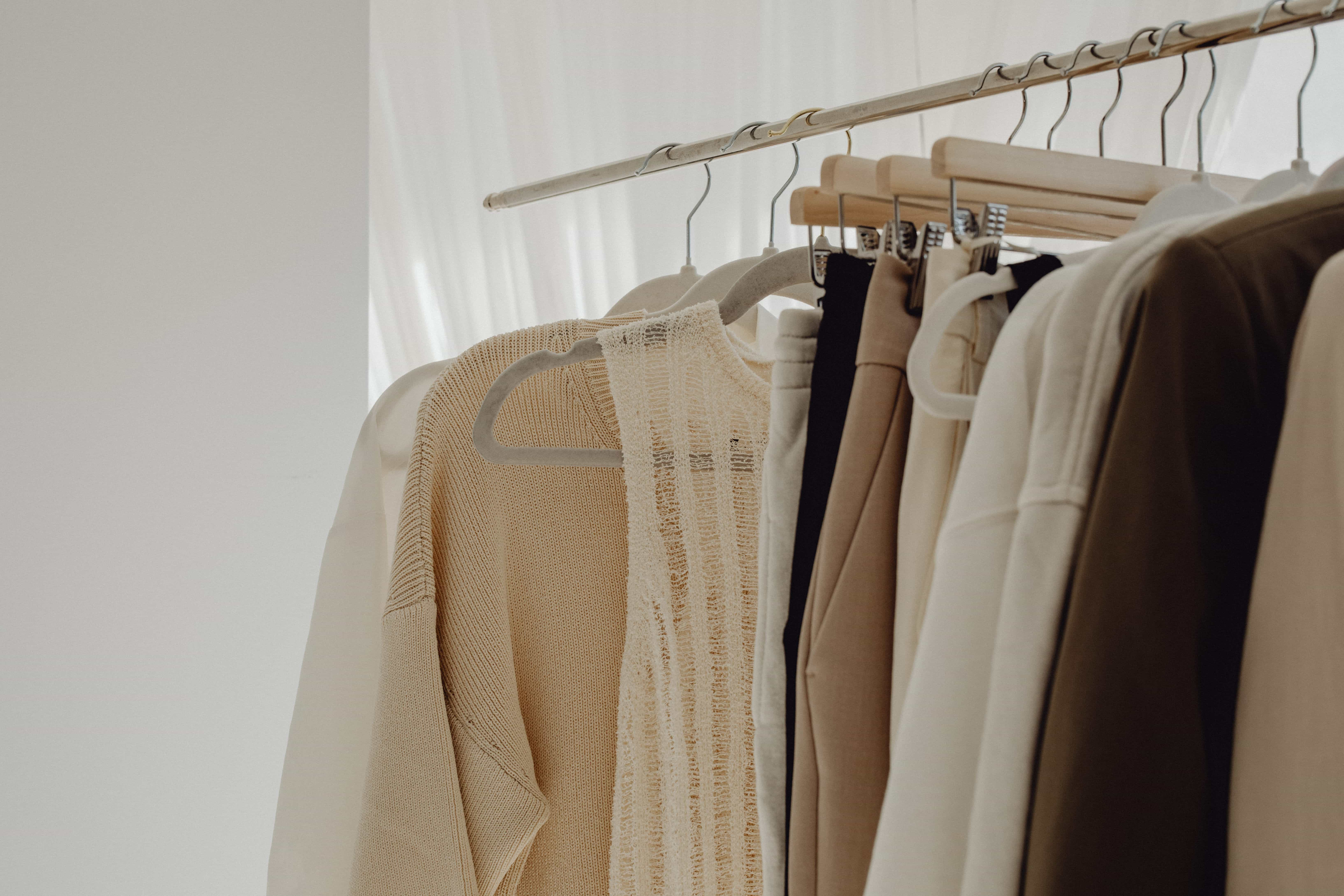
A rack of neutral clothing illustrates the restrained palette shared by many popular online aesthetics. (Karolina Grabowska/Kaboompics)
Why Looking Like Yourself Matters More Than Looking Correct
Personal style is often described as confidence, but confidence alone is too vague. It is closer to continuity.
People with recognizable style tend to repeat themselves. They return to the same trouser shape, the same metal, the same shade of lipstick, the same old jacket, or the same slightly impractical shoes. These choices may not be optimal for every trend or occasion. Their value comes from appearing again and again until they begin to feel inseparable from the wearer.
That kind of repetition runs against the logic of social media, where newness is rewarded and yesterday's successful image must be replaced by tomorrow's. But in real life, repetition creates identity. A garment becomes more expressive when it has survived several versions of the person wearing it.
The fashion industry is paying attention to this desire. Recent reporting has identified a stronger interest among younger consumers in individuality and personal style rather than strict trend conformity. Pinterest's 2026 forecast similarly placed nonconformity and self-expression at the center of several emerging aesthetics, from mismatched beauty to renewed interest in brooches and visibly personalized objects.
The irony, of course, is that individuality can become a trend of its own. The moment personalization becomes commercially valuable, brands begin selling the appearance of a life already lived: pre-distressed leather, pre-arranged bag charms, ready-made clashes, and limited editions designed to feel discovered rather than distributed.
But recognizable style cannot be purchased as a finished set.
It develops through decisions that are repeated long enough to become instinctive. It includes the coat someone repairs instead of replaces, the ring worn with everything, the color that appears even when it is unfashionable, and the proportion that feels right to one body even when a stylist might recommend another.
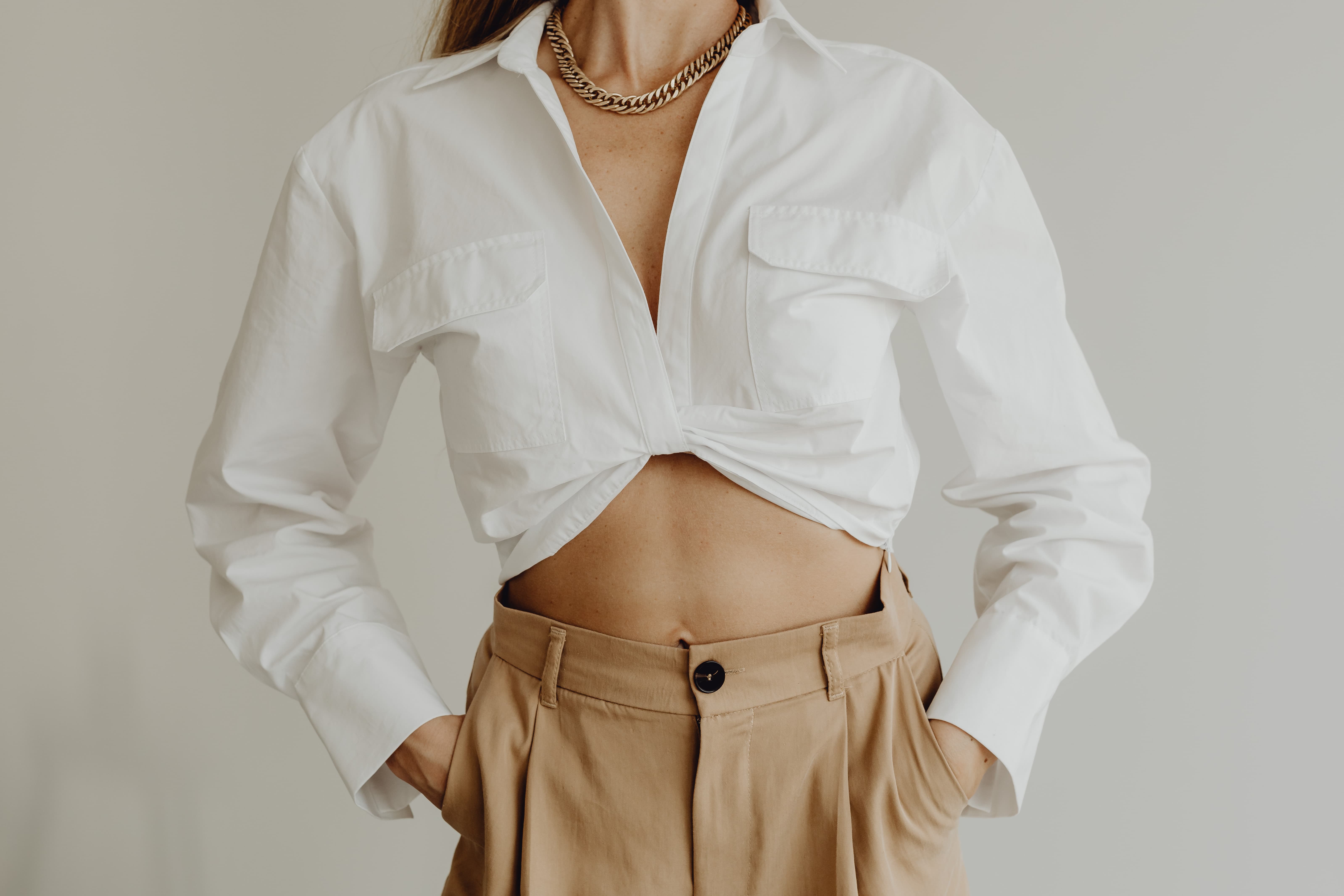
A white shirt gathered at the waist and paired with a chunky chain shows how small styling choices can transform familiar basics. (Karolina Grabowska/Kaboompics)
Why Slightly Wrong Combinations Stay in the Mind
The eye notices interruption.
When everything in an outfit agrees, the gaze moves across it smoothly. The result may be beautiful, but it is also quickly understood. A cream coat, cream knit, cream trousers, and an immaculate leather bag communicate their intention immediately. There is nothing to resolve.
A slightly wrong element creates tension. It slows the eye down.
Perhaps the shoes are heavier than the dress seems to require. Perhaps a men's watch sits beside delicate bracelets. Perhaps an old canvas tote interrupts an otherwise formal outfit. Perhaps two prints share no obvious color but are held together by scale or attitude.
These combinations are memorable because they require interpretation. The viewer has to decide whether the disruption is a mistake, a joke, a personal habit, or a deliberate refusal to finish the outfit in the expected way.
This does not mean visual chaos is automatically interesting. Randomness produces noise just as easily as excessive coordination produces blandness. The strongest mismatches usually contain a hidden relationship. The colors may conflict while the proportions agree. The materials may come from different worlds while the mood remains consistent. One piece may break the rule, while everything around it gives that break enough structure to feel intentional.
Recent beauty and fashion forecasts have embraced asymmetry, conflicting details, unconventional color combinations, and what Pinterest calls “Glitchy Glam.” The appeal is understandable. In a digital environment increasingly capable of producing frictionless images, a visible interruption can function as proof of human preference.
The slightly wrong choice suggests that someone made a decision rather than accepted a template.
It also brings humor back into style. Fashion becomes more inviting when it is allowed to contain surprise, affection, and private references. An inherited brooch on a technical jacket may not be harmonious in the traditional sense, but it tells a richer story than a perfectly coordinated accessory ever could.
Style becomes memorable at the point where correctness stops being the only objective.
Imperfection Is Not the Same as Carelessness
The language of effortless style can be misleading.
It suggests that the most sophisticated people simply wake up knowing how to dress, while everyone else is trying too hard. Yet most convincing ease is supported by a great deal of judgment. The shirt is loose, but the shoulder sits correctly. The hair is undone, but its shape works with the face. The vintage bag is worn, but the shoes are maintained. The outfit contains contrast, but it still has a center of gravity.
Carelessness ignores the relationship between details. Intentional imperfection understands that relationship and chooses where to interrupt it.
This distinction matters because the current appetite for messiness can become as formulaic as the polish it replaces. A wardrobe filled with deliberately distressed pieces, mismatched accessories, and calculated “wrong shoes” can feel just as controlled as an all-beige uniform. Imperfection loses its force when every irregularity has been professionally arranged.
True ease leaves room for circumstance. Clothes crease because a person sat down. Shoes develop marks because they were worn across a city. A favorite jacket appears repeatedly because it remains useful, not because repetition has been staged as a sustainability statement.
Style Begins Where the Template Ends
Looking polished has not become irrelevant. There are moments when precision, formality, and complete visual control remain deeply satisfying. The problem begins only when polish becomes a substitute for identity.
The most interesting style today does not reject beauty or effort. It rejects the idea that beauty must arrive without friction. It allows an outfit to hold different periods, prices, moods, and degrees of formality at once. It accepts that a person can be elegant without appearing untouched by life.
That may be why slightly imperfect dressing feels so persuasive now. It restores evidence of choice.
In a culture where an algorithm can assemble a flawless look in seconds, style is no longer proven by how completely someone follows the visual logic of the moment. It appears in the small departures: the repeated piece, the unexpected shoe, the uncorrected crease, the color that remains for reasons no trend report can explain.
Perfection shows that a person knows the rules.Style begins when we can see which ones they decided not to follow.
References
Hussain, B., Aslam, S., & Imran, A. (2025). Manufacturing beauty: How AI and social media are redefining aesthetic norms in emerging digital cultures. Acta Psychologica, 260, Article 105734. https://doi.org/10.1016/j.actpsy.2025.105734
O’Keeffe, E. (2025, September 23). Did the algorithm kill personal style? Coveteur. https://coveteur.com/algorithm-personal-style
Pinterest Newsroom. (2025, December 9). Pinterest Predicts: Nonconformity, self-preservation, and escapism drive 21 trends for 2026. https://newsroom.pinterest.com/news/pinterest-predicts-nonconformity-self-preservation-and-escapism-drive-21-trends-for-2026/
Qarina, A. (2025, December 30). 2026 trend predictions: Personality, color and maximalist fashion. Tatler Asia. https://www.tatlerasia.com/style/fashion/2026-trend-predictions-personality-over-perfection
Sun, H., & Wu, R. (2025). Filters, algorithms, and the “imagination tax”: The dilemma of aesthetic self-objectification among Chinese young women on social media. Frontiers in Psychology, 16, Article 1651435. https://doi.org/10.3389/fpsyg.2025.165143