


Image Credit: Lawrence Schwartzwald // Getty Images
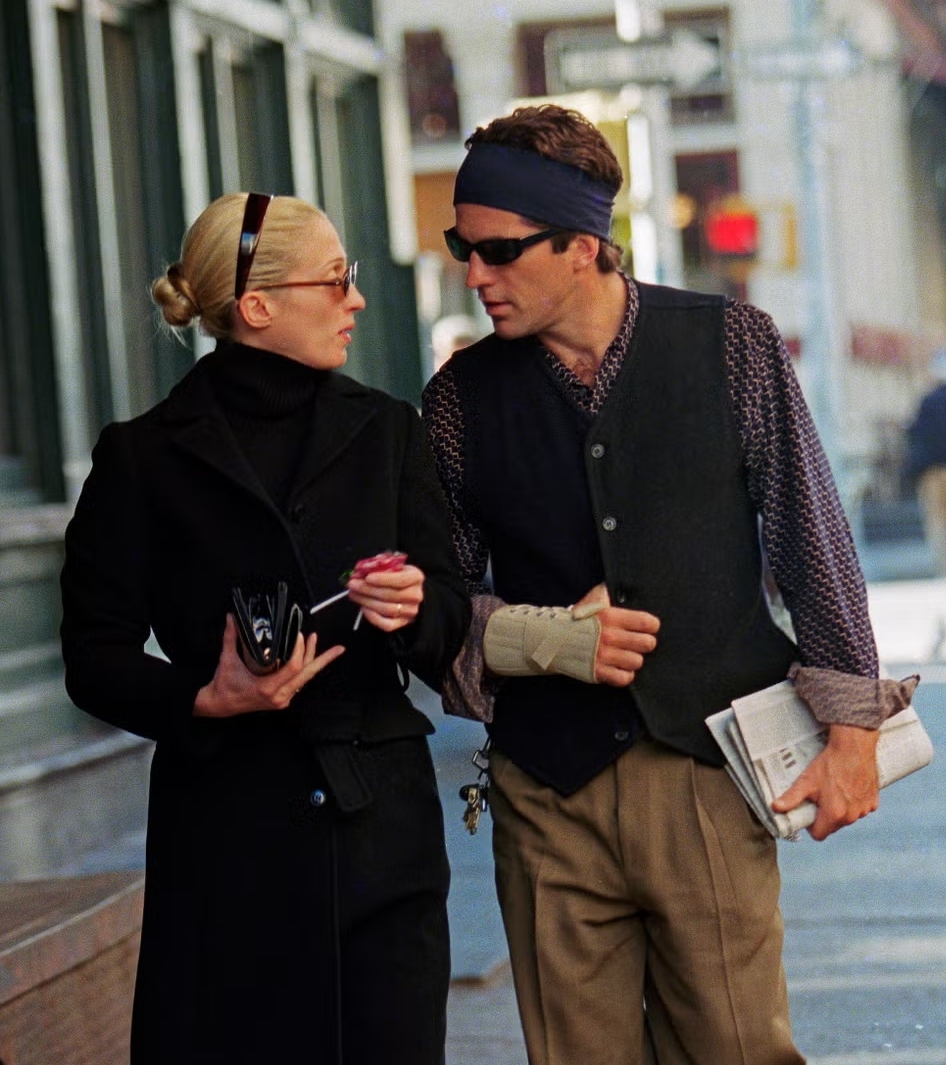
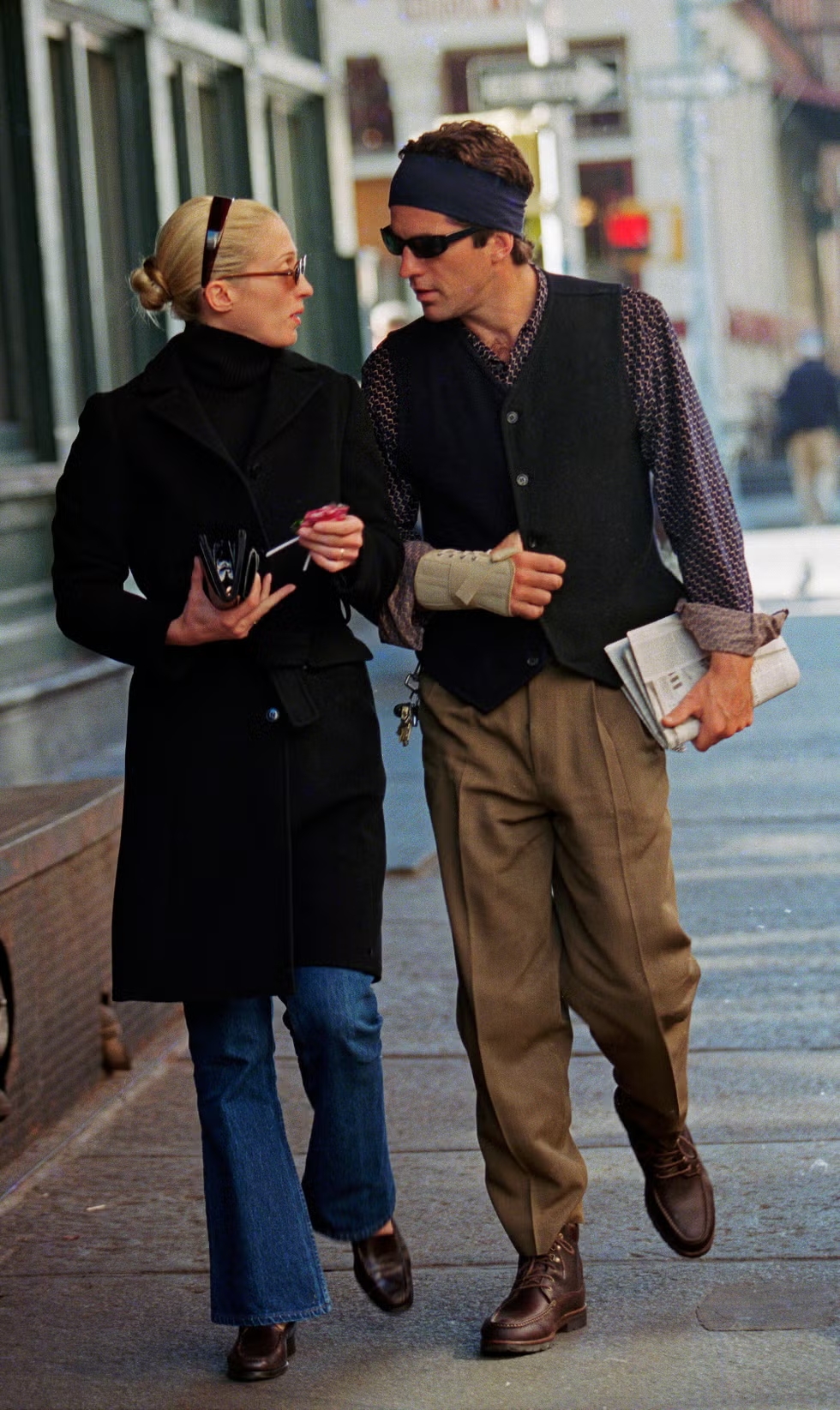
There are couples the public remembers for love, and then there are couples it remembers for atmosphere. John F. Kennedy Jr. and Carolyn Bessette-Kennedy belong to the second category. They are less recalled as two ordinary people in a marriage than as a study in contrast: ease and reserve, warmth and distance, charisma and control. He seemed born to move through the world. She seemed born to resist being fully absorbed by it.
That is part of why they continue to invite projection. People do not just revisit them for the romance, or the tragedy, or the perfect minimalism of the 1990s. They return to them because the pair still feels psychologically unfinished, still slightly unreadable. And perhaps that is exactly why the question of personality typing lingers around them. If one were to place John and Carolyn into the contemporary language of MBTI, not as diagnosis but as cultural interpretation, they would not feel like matching types at all. They would feel like opposite forms of magnetism.
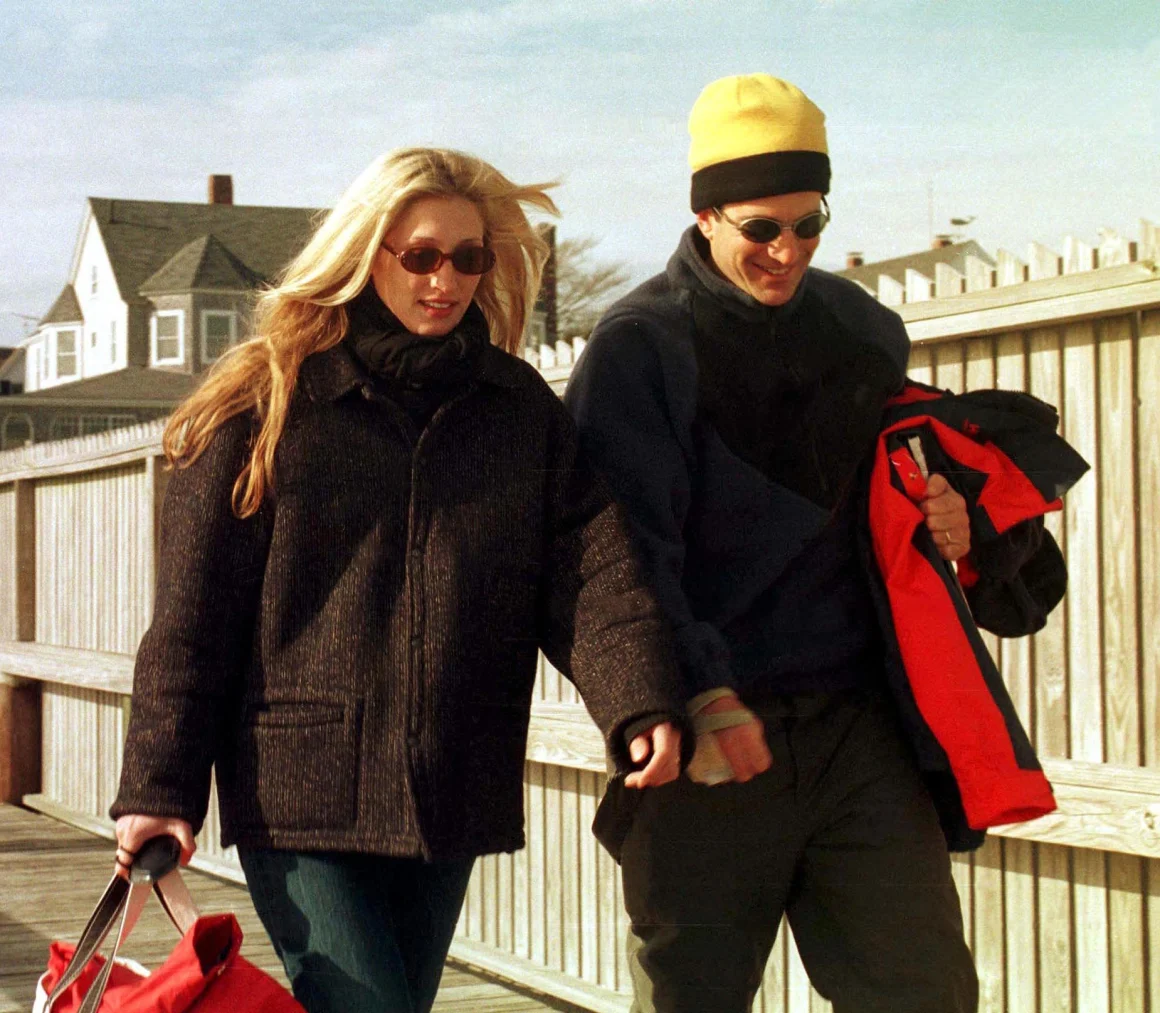
Image Credit: Kevin Wisniewski // Shutterstock
John, at least from the public record, reads as someone unmistakably extroverted. Friends and biographers have long described him as playful, socially agile, funny, and almost instinctively charming. He had the kind of presence that made people feel drawn in before they could fully explain why. He could move between seriousness and lightness with unusual ease, and there was always the suggestion that his charisma was less calculated than effortless. If one had to guess, John feels less like the polished emotional manager of an ENFJ and more like the brighter, looser, more improvisational energy of an ENFP.
That distinction matters. ENFJs often seem composed around responsibility; they organize emotion, direct people, and carry a kind of social architecture around with them. John, by contrast, appears to have had more spontaneity than structure. His appeal was not that of a strategist. It was that of someone animated by possibility. Even George, the magazine he founded, reflected that instinct. It was not a conventional political project. It was a hybrid, an attempt to make politics, celebrity, and public culture collide in a new way. That kind of restless, imaginative crossover thinking feels deeply ENFP: idealistic, curious, eager to reframe the old script rather than simply inherit it.
And yet there was clearly another layer to him, one that makes the ENFP guess more poignant than breezy. People often imagine extroverted charm as proof of inner ease. In fact, with John, it may have been the opposite. He was carrying one of the most mythologized names in American life, and much of his adulthood seems to have been shaped by the effort to be larger than the legend without being crushed by it. What reads as openness in public can sometimes mask a very real hunger for freedom. That, too, feels ENFP-like: the desire to stay light while living under extraordinary symbolic weight.
Carolyn is harder to type, which is perhaps fitting. She’s always like someone the culture could see but never quite access. Public memory tends to flatten her into images—dark sunglasses, silk slip dresses, camel coats, a face that looked composed even when the frenzy around her was not—but the impression she left was more than visual. She seemed selective in a way that went beyond shyness. She did not merely guard her privacy, but also appeared to understand that once the world decides who you are, it begins to consume you through that definition.
For that reason, Carolyn reads like the rarer kind of INTJ: aesthetically acute, deeply self-possessed, and unwilling to perform accessibility just because others demand it. Her public image suggested someone who observed before she offered, judged before she revealed, and reserved part of herself as non-negotiable. That is not just introversion. It is architecture.
INFJs are often imagined as inward, complex, and intuitive, but they also tend to carry a relational softness, a kind of emotional permeability. Carolyn, by contrast, seemed to move through the world with stronger boundaries than permeability. Even her style suggested this. It was elegant, yes, but also withholding. She rarely gave more than the frame required. There was no obvious desire to charm the room, explain herself, or turn her interiority into a public resource. If John’s presence is an invitation, Carolyn’s often like a line drawn with perfect precision.
This is why the pairing makes such intuitive sense. If John was an ENFP, he would have been drawn not simply to Carolyn’s beauty but to her resistance. She embodied a way of being he may have deeply admired: self-containment, sharp edges, a refusal to be over available. She represented a kind of clarity that public men often find intoxicating in private. And if Carolyn was an INTJ, one can see why John might have appealed to her in return. He brought warmth, motion, social ease, and that particular kind of American optimism that seems to believe every room can still open. He was not just a Kennedy heir. He was, by many accounts, deeply alive to people.
The chemistry, then, was not simply that opposites attract. It was that each seemed to hold a mode of survival the other lacked. John moved toward the world. Carolyn knew how to step away from it. He metabolized attention. She distrusted it. He was expansive where she was exacting. She was contained where he was luminous.
Of course, this sort of pairing is not only romantic, but might be fragile. What begins as fascination can become friction, especially under pressure. The extroverted idealist may wonder why the more reserved partner cannot let life in more easily. The guarded strategist may wonder why the other cannot understand the cost of too much exposure. In an ordinary marriage, those tensions would already matter. In a marriage lived under relentless public scrutiny, they would have been amplified beyond measure. The issue would not have been merely personality. It would have been what happens when two different temperaments are asked to survive the same impossible level of visibility.
So if one had to guess, the shorthand would be this: John F. Kennedy Jr. as ENFP, Carolyn Bessette-Kennedy as INTJ. But the letters themselves are less interesting than what they illuminate. He appears, in retrospect, like someone who radiated outward even when burdened. She appears like someone who preserved an interior world at all costs. He made people feel closer. She made mystery feel elegant. Together, they created that rare and lasting thing: a relationship the public still believes it almost understood.
And perhaps that is the most Vogue answer of all. Not that John and Carolyn can be neatly typed, but that their attraction still seems legible through temperament. He was all movement. She was all form. He seemed to offer the world his warmth. She seemed to protect herself through shape, silence, and selection.
If they fascinated then, and fascinate now, it is because they embodied a tension fashion has always understood better than psychology: the seduction of contrast, and the strange intimacy of being drawn to the exact kind of person who lives in the emotional climate you do not naturally know how to survive.
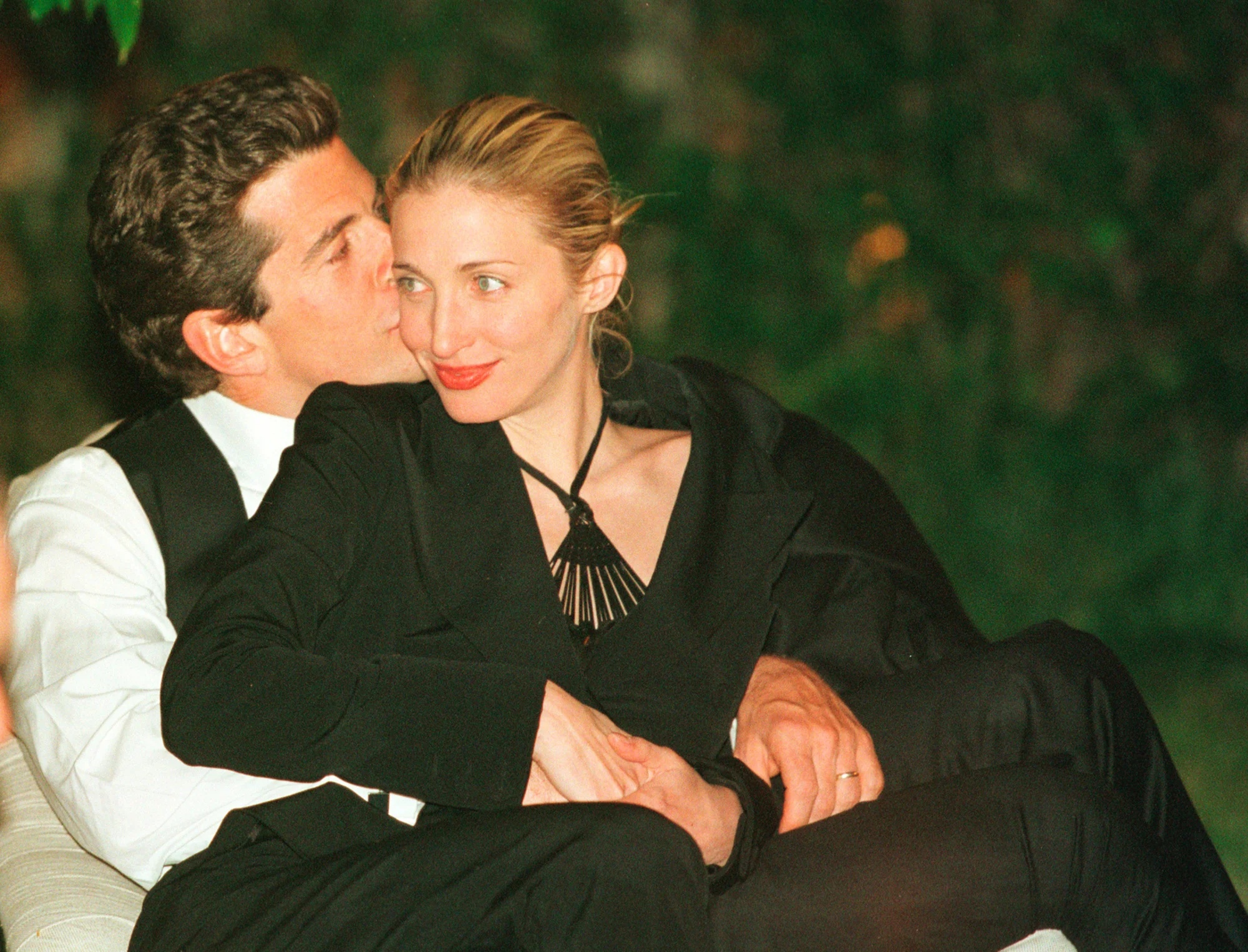
Image Credit: Tyler Mallory // Getty Images