


Image Credit: Denis Reggie
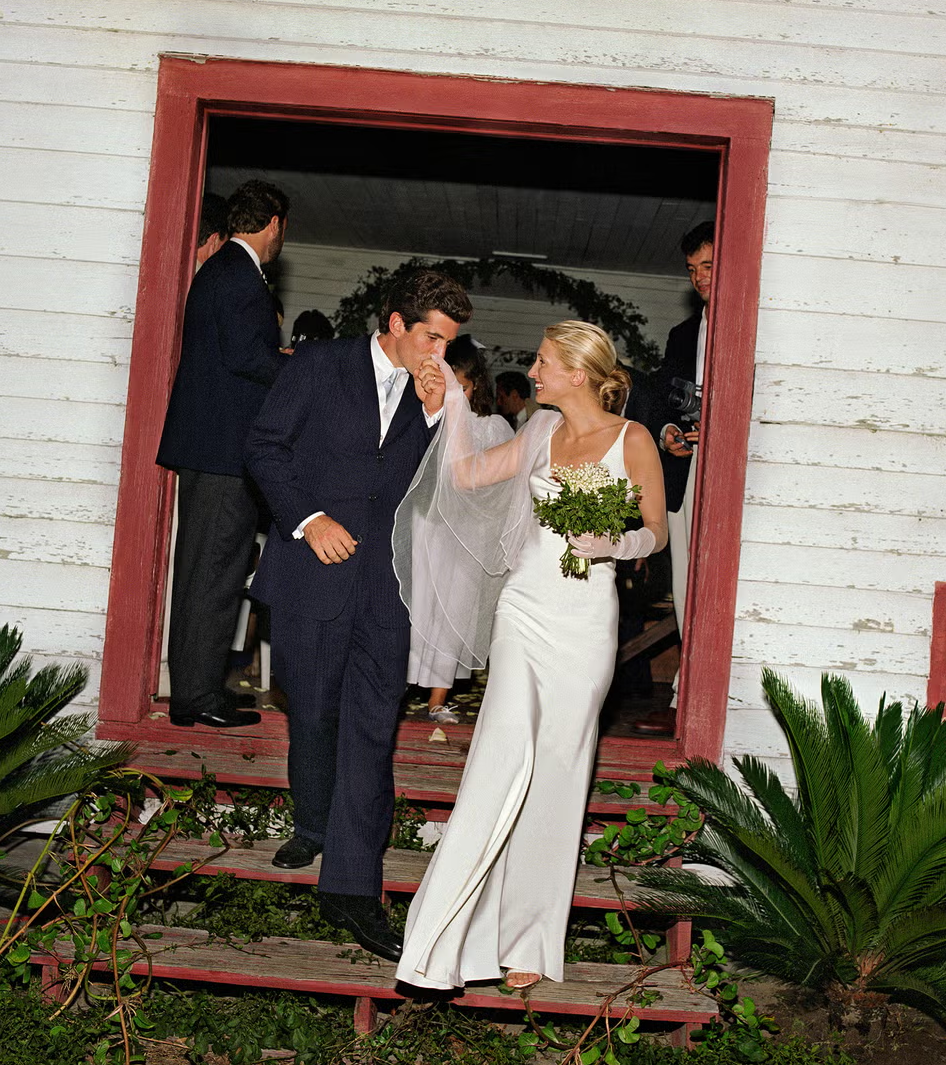
Most retellings of Carolyn Bessette and John F. Kennedy Jr.’s wedding lean on the same vocabulary: iconic, private, minimalist, timeless. That version is not wrong. Their September 21, 1996 ceremony on Cumberland Island, Georgia, with roughly 30 to 40 guests, has long been remembered as one of the most beautiful and elusive weddings of the decade. But beauty alone does not explain why it still feels so magnetic.
What makes the wedding enduring is not simply that it looked elegant. It is that it was designed as an act of refusal. Not a refusal of romance, but a refusal of access. Not a rejection of style, but a rejection of spectacle. At a moment when John F. Kennedy Jr. represented one of the most publicly visible last names in America, and Carolyn Bessette had already become the subject of intense press fascination, their wedding did something remarkably modern: it protected intimacy by controlling visibility.
That is the angle often missed in more conventional coverage. The usual story focuses on the slip dress, the candlelight, the coastal chapel, the hush of old money and old romance. But the sharper reading is this: their wedding was not merely understated; it was strategically unshareable. Cumberland Island was not chosen only because it was beautiful. It was chosen because it was hard to reach. ELLE Decor notes that there was no commercial airport on the island, and that guests could only arrive by private plane or boat, which made paparazzi access significantly more difficult. Greyfield Inn’s co-owner described the setting as “protected, intimate, and removed from the world”—a place where celebration could feel personal rather than performative.
In that sense, the wedding reads less like a fairy tale and more like a form of spatial defense. Every detail seems to narrow the distance between the couple and the life they were trying to preserve. The guest list was exceptionally small. Invitations were tightly controlled. Harper’s Bazaar reports that the engagement itself was hidden from the public while they planned the ceremony, and that the wedding took place with no more than 40 guests.
This is what makes the event more radical than it first appears. For a Kennedy wedding, the expected script would have been grandeur, dynasty, and public choreography. ELLE Decor explicitly contrasts John and Carolyn’s ceremony with Caroline Kennedy’s much larger Cape Cod wedding a decade earlier, attended by hundreds and watched by thousands. Against that legacy, John and Carolyn did not merely “keep things simple.” They shrunk the wedding until it could no longer function as a public performance.
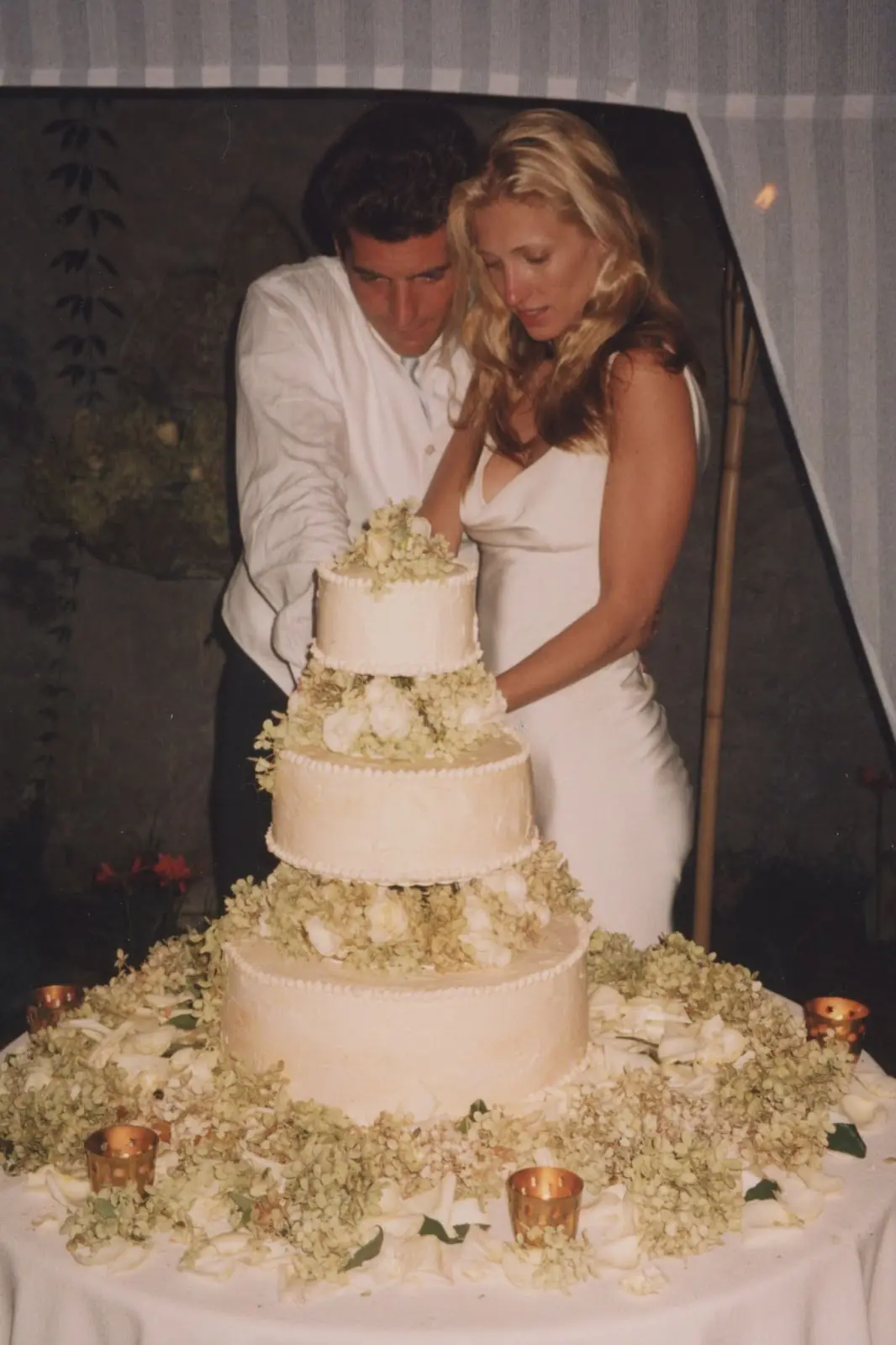
Image Credit: Carole Radziwill
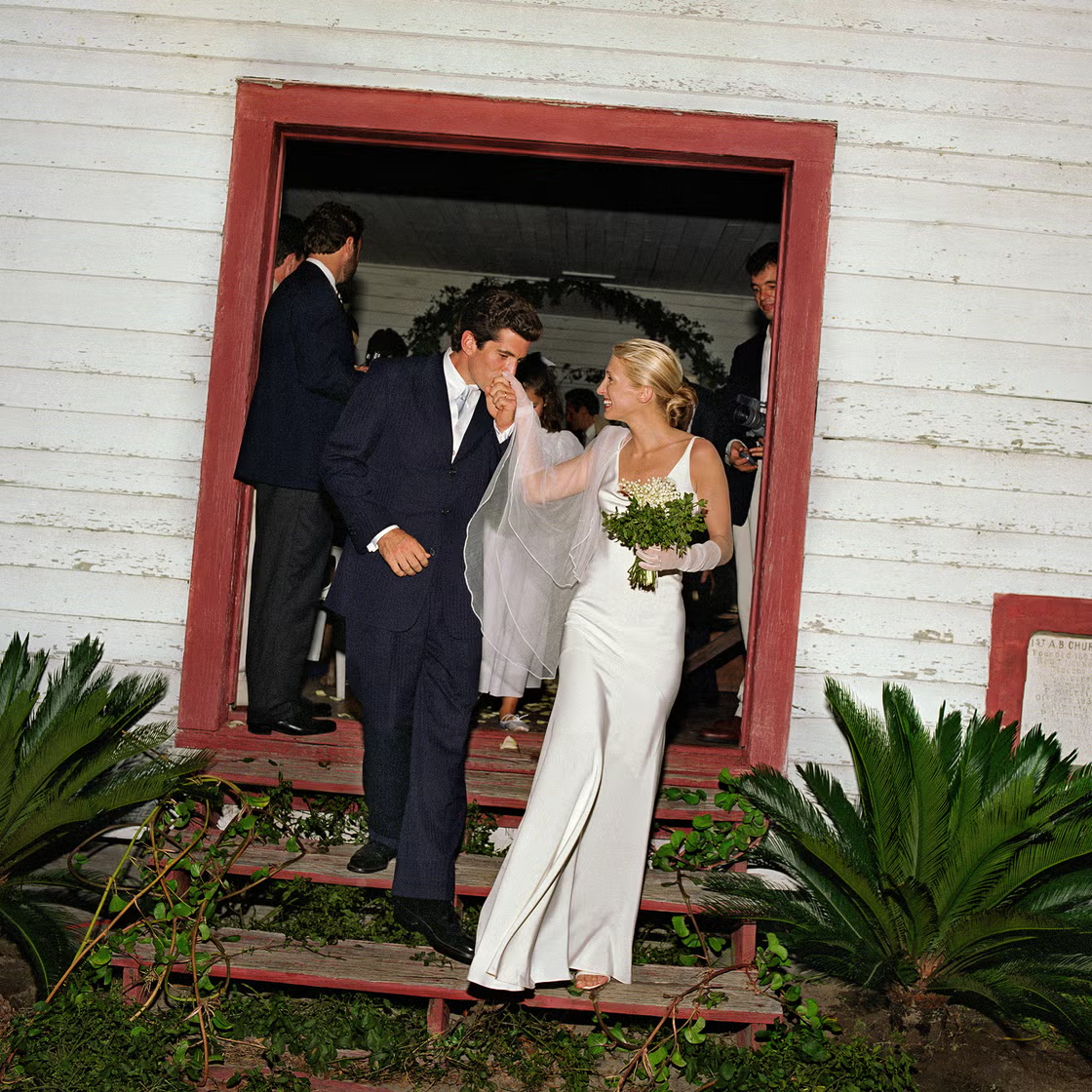
So the true minimalism of the wedding was not only visual. It was social, architectural, and media-aware. They were not just editing flowers and decorations. They were editing access. They reduced audience, reduced noise, reduced circulation, reduced the number of ways the outside world could enter the event and convert it into content. Seen this way, the famous Narciso Rodriguez dress becomes part of a larger logic. Its clean slip silhouette was not just modern; it was almost anti-theatrical. Harper’s Bazaar notes that the dress crystallized a new kind of bridal minimalism, but its power also lay in how fully it aligned with Carolyn’s broader instinct against excess and display.
Carolyn herself is central to this interpretation. Harper’s Bazaar emphasizes that she valued privacy intensely, never gave an interview during the relationship, and rarely spoke publicly about her experience. The article also notes that she disliked seeing her personal life turned into a public spectacle to be exploited and sold. That language matters. It suggests that the wedding was not just aesthetically “her”. It was philosophically her. She understood that image can be seductive, but also extractive.
That is why the wedding still feels unusually current. Today, weddings are often built with the assumption of visibility: photographs, reposts, mood boards, audience reaction, algorithmic afterlife. John and Carolyn, decades earlier, seemed to grasp the opposite truth: what is most precious may be what resists circulation. Their wedding has lasted in cultural memory not because we saw everything, but because we did not. There are only a few publicly circulated images, yet those images became almost mythic precisely because they were scarce. Harper’s Bazaar notes that there are very few photos in circulation, even as Carolyn’s bridal image continues to live on in contemporary visual culture.
And that may be the most compelling way to understand the wedding now. It was not the ultimate minimalist wedding because it had fewer decorations or a slimmer dress. It was minimalist in a more radical sense: it minimized public consumption. It withheld itself. It preserved something. It refused to become fully available.
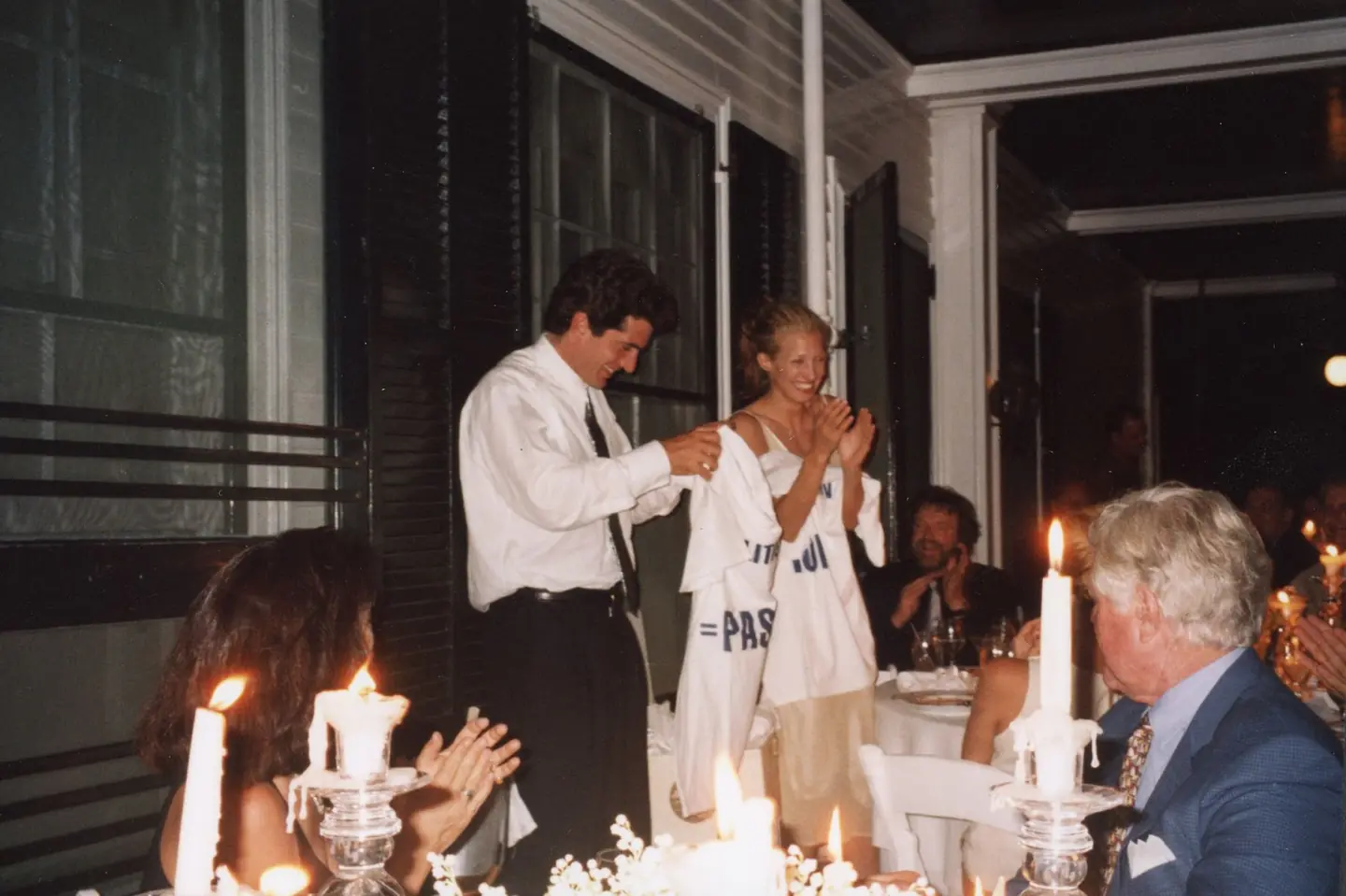
Image Credit: Carole Radziwill
Carolyn Bessette and John F. Kennedy Jr.’s wedding was not simply beautiful. It was disciplined.
Not just elegant, but evasive.
Not merely iconic, but intentionally out of reach.
That is why it still fascinates.
Because beneath the romance was something even rarer:
the quiet luxury of not giving the world everything.
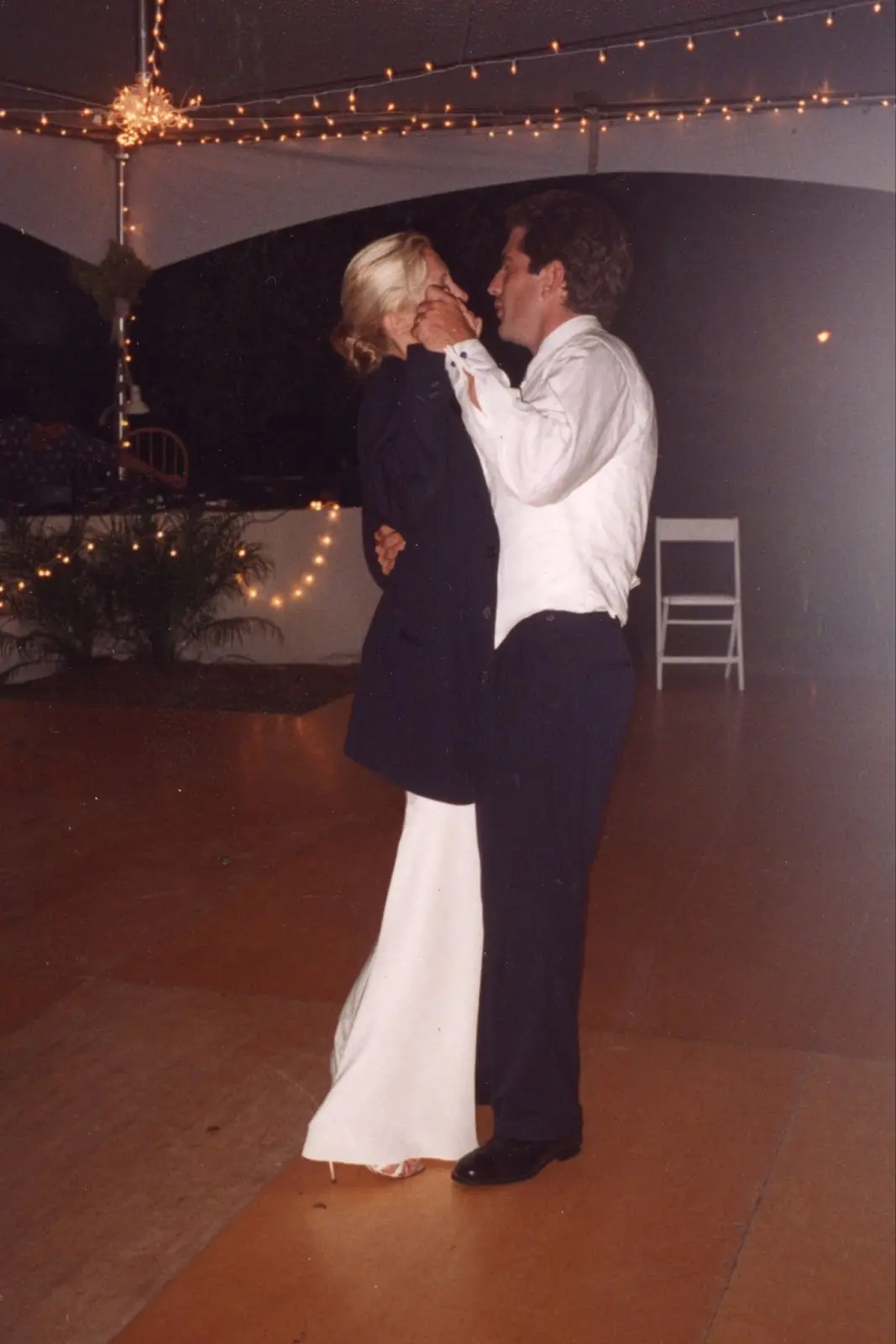
Image Credit: Carole Radziwill