


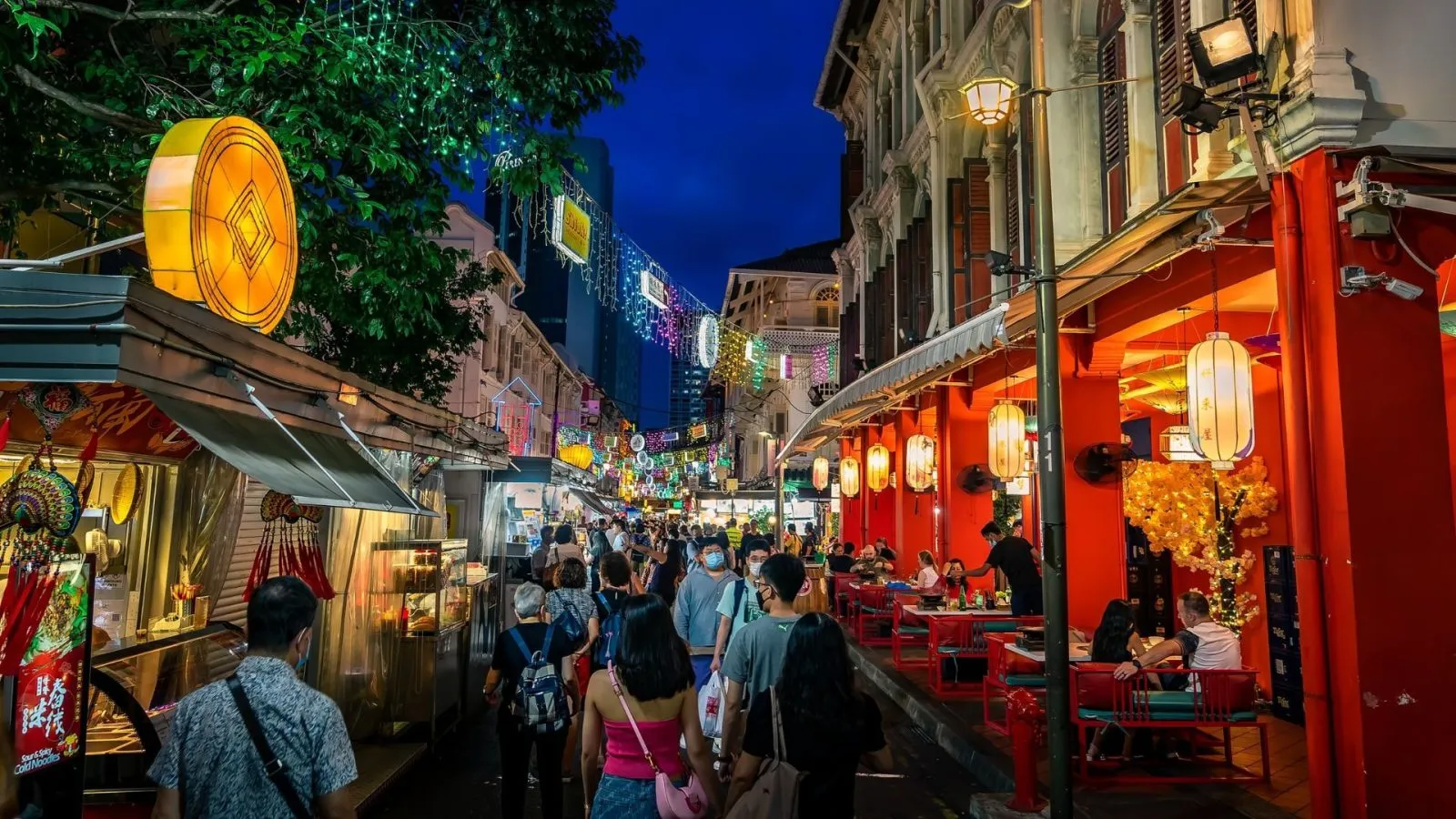
In a city as layered as Singapore, Chinatown remains one of the rare places that naturally slows people down. The moment the streets come into view, the air seems to carry multiple textures at once: the medicinal scent of traditional herbs, the dry sweetness of old paper from secondhand books, and coffee drifting out from narrow lanes. The streets are not wide, yet within a short walk, the neighbourhood reveals many cultural registers, from long standing bookshops and small exhibition spaces to independent galleries tucked quietly on upper floors. Chinatown feels like a cultural journal that keeps gaining new pages, waiting to be opened.
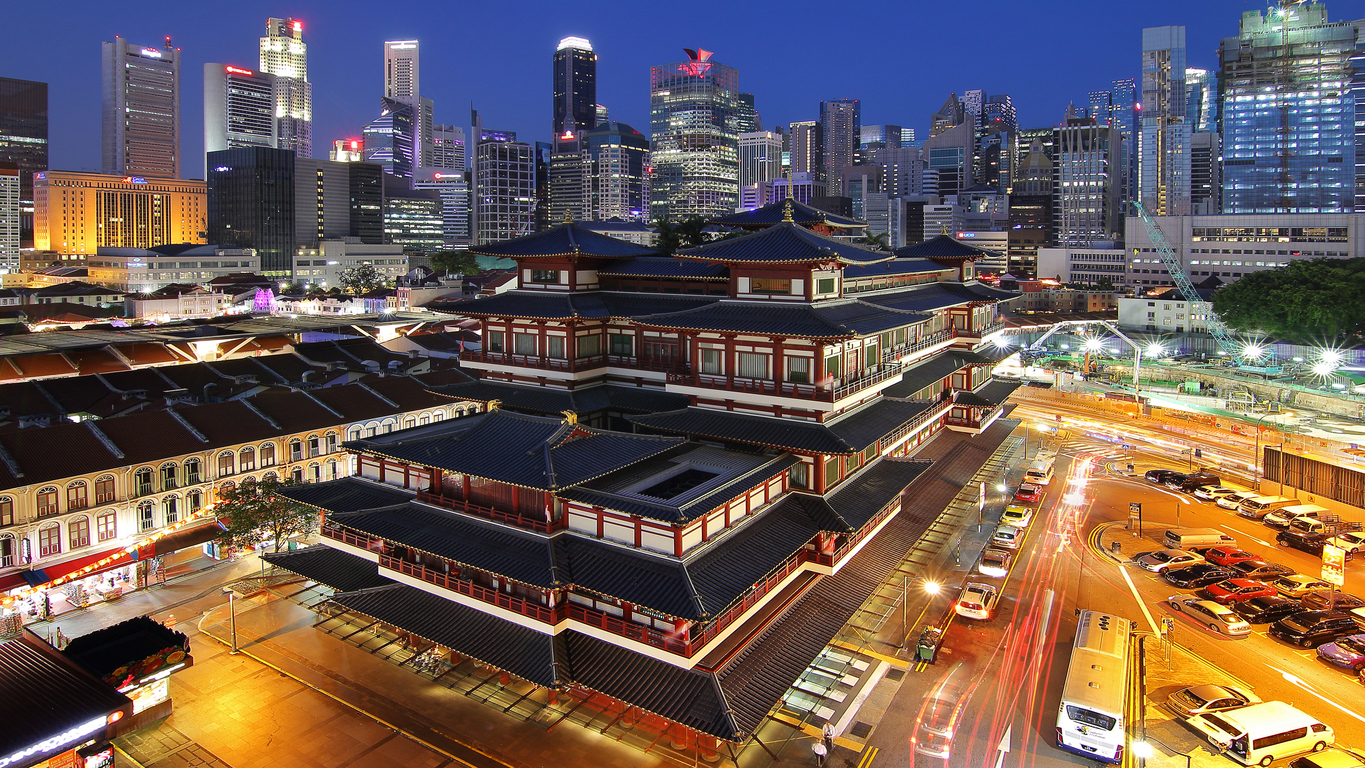
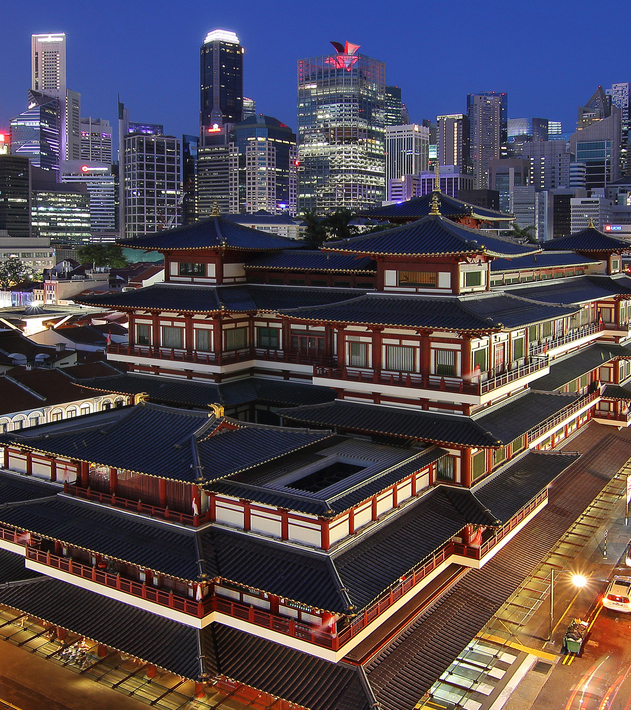
Seen as an architectural walk, its beauty is not limited to the festive glow of lanterns. It is also in the way different eras of the city sit side by side along the same route. Around South Bridge Road, two religious landmarks often stop people in their tracks for opposite reasons. Sri Mariamman Temple is known for its South Indian style entrance tower, densely detailed with sculpted figures in saturated colour that makes the street scene feel instantly more vivid. Nearby, the Buddha Tooth Relic Temple and Museum draws on Tang inspired architectural language and a design concept shaped by Buddhist mandala ideas. Its presence is composed and striking, and when the lights come on at night, it reads like a calm cultural beacon within the neighbourhood.
While many visitors notice the surface decorations first, the more lasting cultural experience often hides in the corners. An older bookshop may place a few stacks of yellowed print collections by the doorway. The owner sorts them slowly, occasionally nodding to passers by. The books are not arranged with the urgency of retail. They feel closer to a personal act of keeping culture in place.
"Turning a page, the texture of the past becomes tangible, and it is easy to want to stay a little longer, as if holding a quiet conversation with time itself."
Continue along the street and small exhibition spaces appear. Their themes are rarely heavy handed. Instead, they tend to feel close to everyday life. Some focus on traditional Nanyang craft, some trace how Chinatown has changed across decades, and others use contemporary art to reinterpret urban memory. These exhibitions do not insist on teaching. They use stories, images, and colour to invite visitors into the emotional atmosphere of a particular moment in time. The experience is light in tone but not shallow, and it suits anyone who looks for comfort and aesthetic detail inside culture.
Many of Chinatown's most meaningful micro landmarks sit inside these transitions. The shophouse facades and covered walkways along Pagoda Street and Temple Street preserve the neighbourhood's original scale. Window shutters, pastel walls, and continuous sheltered five foot ways naturally slow the walking rhythm. For those who want to understand the migration story more clearly, Chinatown Heritage Centre is worth stepping into. Located on Pagoda Street, it sits within restored shophouses and recreates early residents' living conditions. It turns a street view into a view of how people once lived.
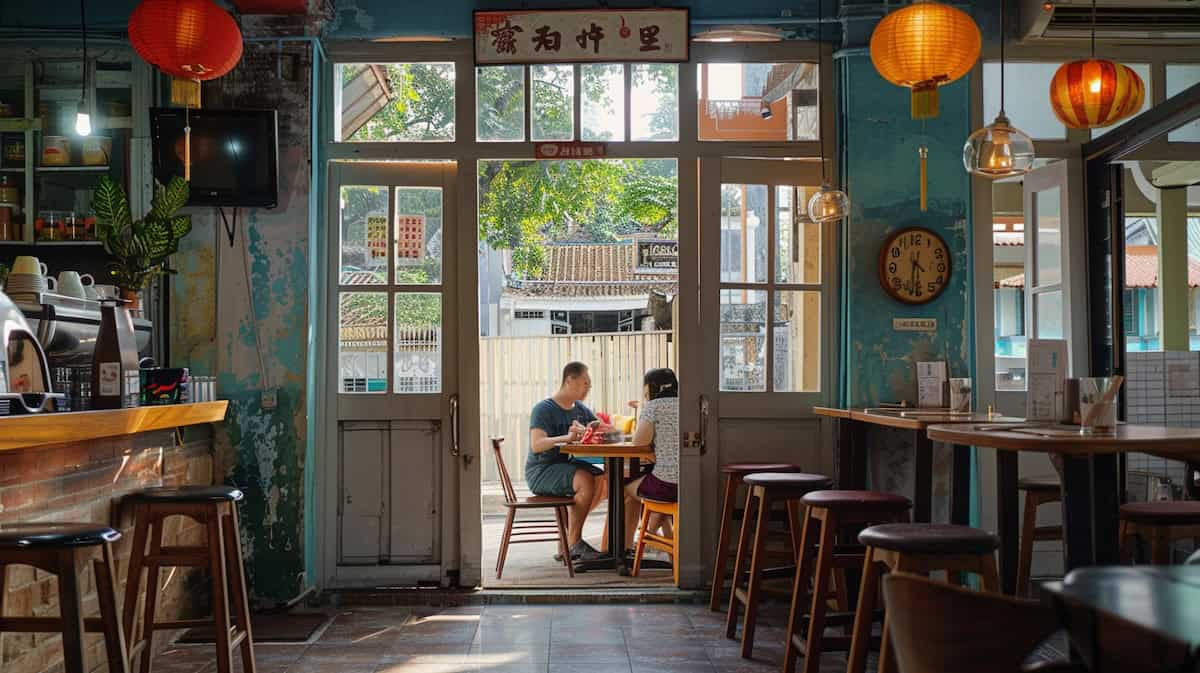
Cafes in Chinatown often function as cultural spaces in their own right. In quiet corners, people order local coffee, turn a page of a book, or write a few lines. Some watch the street. Some disappear into music through headphones. Some simply sit still and let the flow of people and time pass by. This form of cultural leisure reflects shared preferences across younger visitors and office workers: an experience that feels easy, yet still has depth. Even a short half hour can be enough to step away from the city's pace and enter a softer, more aesthetic frame of mind.
If everyday landmarks are included as part of the walk, Chinatown Complex is a classic stop. Located along Smith Street, it combines a hawker centre with a market and offers one of the clearest ways to observe how the neighbourhood runs in daily life.
In the early evening, a few small music spaces begin to glow. There are no large productions here. Instead, local independent musicians, violin students, and lovers of Nanyang sounds share music in the simplest way. Catching a few lines of song while passing by can soften the mood without warning. This low barrier style of cultural participation is also what many younger visitors tend to prefer. The goal is not always a grand artistic statement, but something close to life that makes the heart feel lighter.
For those who want to extend the neighbourhood's beautiful architecture a little further, Thian Hock Keng near Telok Ayer is often included within the same walking radius. It is widely regarded as one of Singapore's significant Hokkien temples, historically linked to early migrant journeys by sea, and admired for the craftsmanship of traditional southern Chinese temple building.
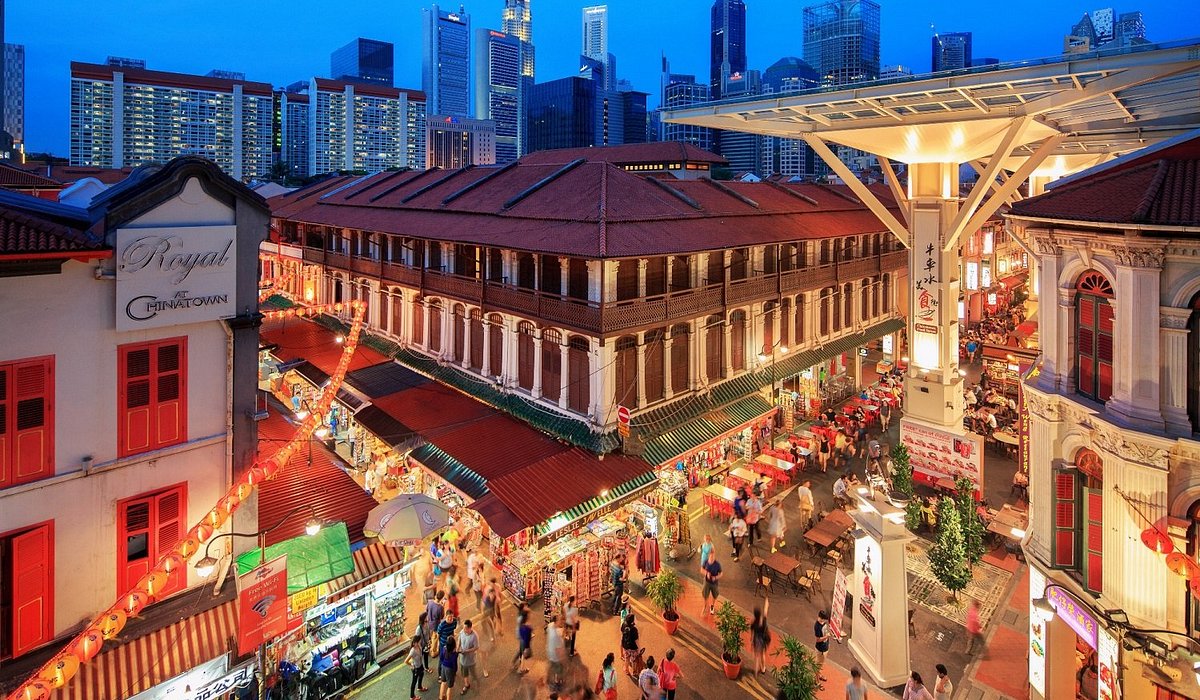
Chinatown works so well as cultural experience content because it offers more than reading, exhibitions, and art.
Chinatown also allows a close look at how cultural consumption is embedded in everyday routines. Some people come looking for emotional release, some for stories, and some simply for a sense of aesthetic warmth beneath the shade of older buildings. Preferences naturally separate here: younger visitors gravitate toward independent exhibitions and design minded cafes, office workers lean toward light reading and short pauses, while travellers are drawn to traditional cultural spaces.
Culture is rarely something deliberately placed on display. It is more often a way of living shaped by people and space together. What Chinatown offers is a rhythm that can be felt, tasted, shared, and recorded. It gives the city a lifestyle that is less rushed, less transactional, and still full of meaning.