
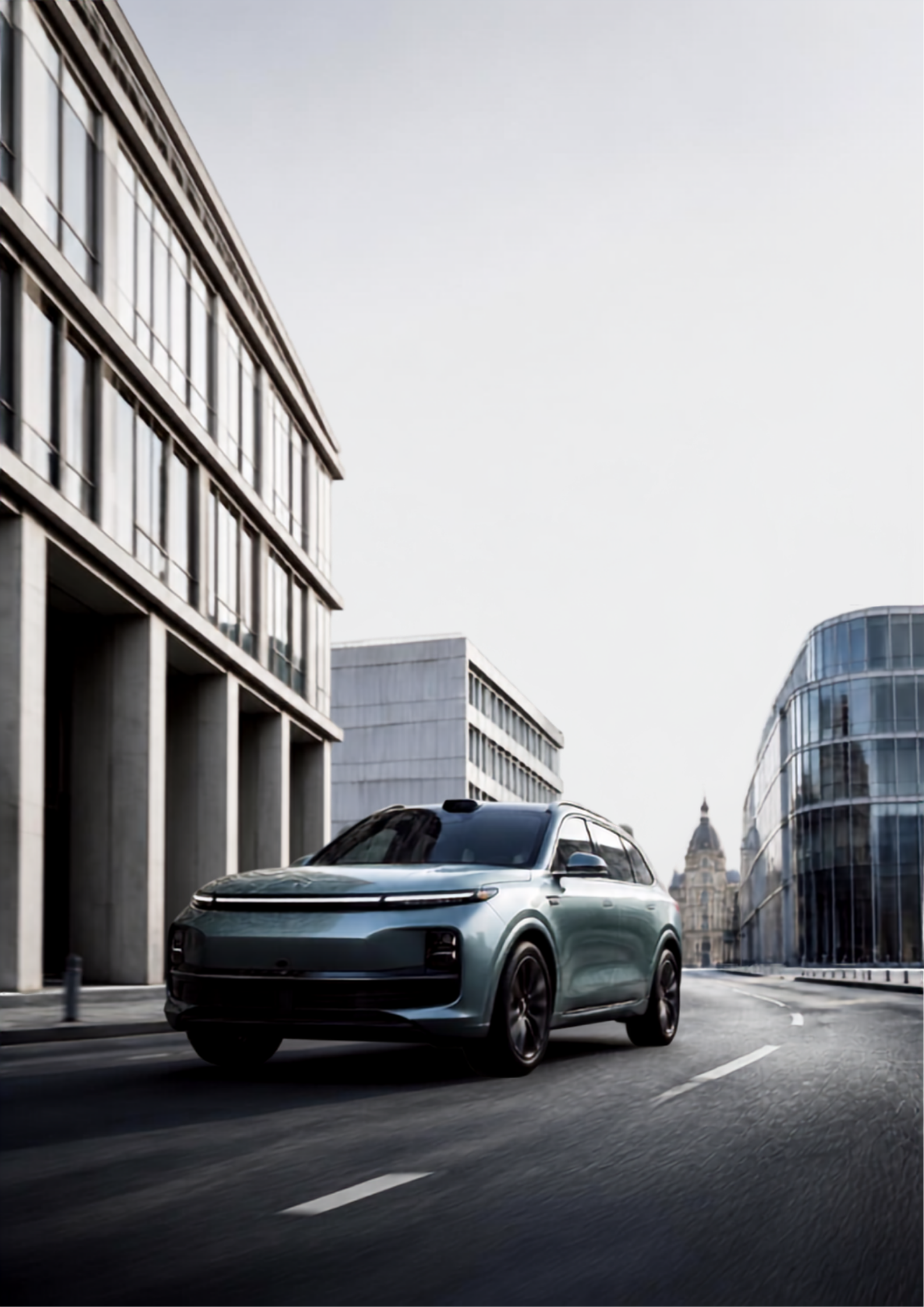


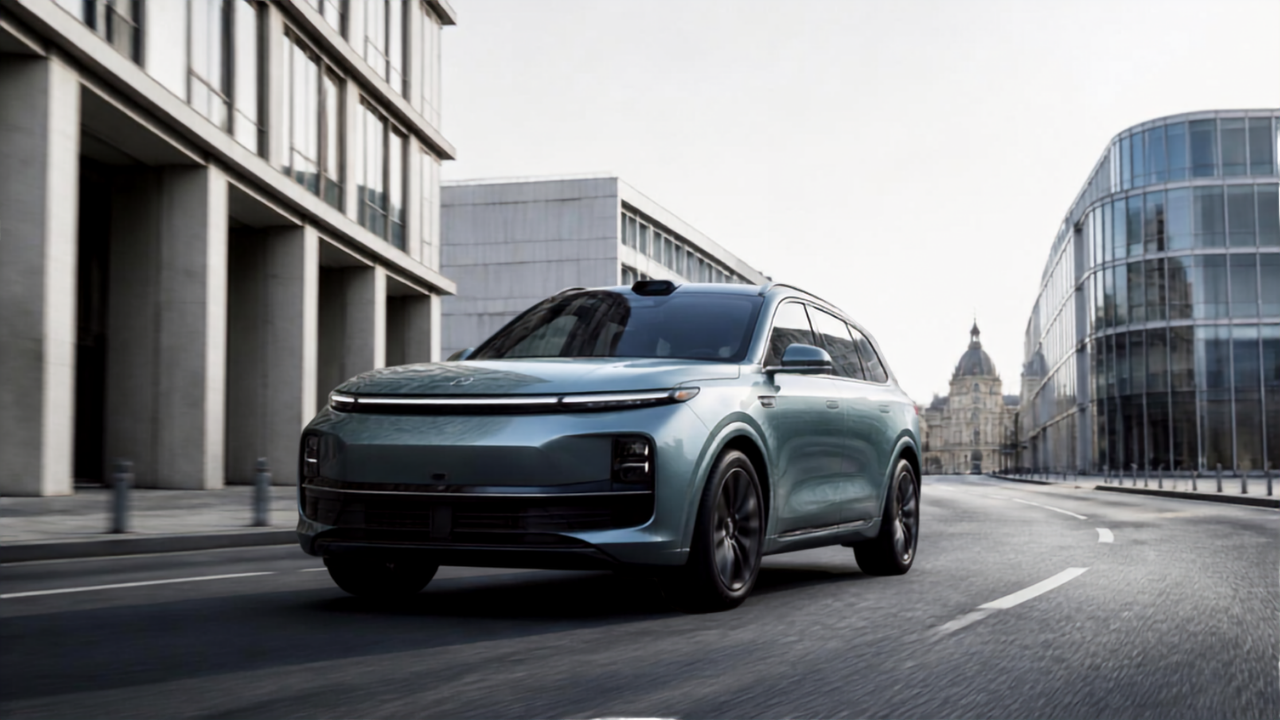
For years, the European view of Chinese electric vehicles was simple: they were cheaper.
That explanation is becoming harder to sustain. Price still matters, especially as European households remain cautious about the cost of switching to electric. But Chinese carmakers are no longer competing only through discounts. They are entering Europe with an industrial system built around batteries, tightly connected suppliers, software-led vehicles and unusually fast product development.
The numbers show how quickly the market is changing. According to JATO Dynamics, Chinese brands captured 5.1% of the new-car market across 28 European countries in the first half of 2025, almost twice their share a year earlier. Their registrations increased by 91%, even as Europe's overall car market remained broadly flat [1].
The shift is happening alongside Europe's wider move toward electrification. Data from the European Automobile Manufacturers' Association, or ACEA, shows that battery-electric vehicles accounted for 17.4% of EU new-car registrations in 2025, up from 13.6% in 2024 [2].
Chinese brands are still far from dominating Europe. But their growth raises a larger question: if price were their only advantage, would tariffs and stronger competition not have slowed them more sharply?
The answer lies deeper inside the car—and inside the industrial system that produces it.
The battery is more than a component
The battery is the most expensive and strategically important part of an electric vehicle. China's advantage begins here.
According to the International Energy Agency, China accounted for 70% of global electric-car production and more than 80% of battery-cell production in 2025. It also produced about 85% of the world's cathode active materials and more than 90% of its anode active materials [3].
This concentration connects mineral processing, battery research, component manufacturing and vehicle assembly within one industrial network. Carmakers can work more closely with battery companies, adjust specifications more quickly and bring new technologies into mass production without waiting for a distant supplier chain to catch up.
The price gap remains significant. IEA data shows that battery-pack prices in China were 35% lower than in Europe in 2025. Lithium iron phosphate, or LFP, batteries were also more than 40% cheaper on average than nickel manganese cobalt, or NMC, alternatives [4].
LFP technology is now widely used in affordable Chinese vehicles because it offers relatively low costs, strong thermal stability and a long service life. It may offer less energy density than some nickel-based batteries, but for an urban car or family SUV, the balance between cost, range and safety can be more important than maximum performance.
This helps explain lower vehicle prices. But the deeper advantage is flexibility. A manufacturer can use a smaller battery for an urban model, a larger pack for a premium SUV or a plug-in hybrid system for consumers who are not ready to depend fully on public charging.
The battery is not simply purchased at the end of the design process. It shapes the entire product.
A supply chain designed for speed
China's automotive supply chain has developed around one of the world's largest and most competitive electric-car markets.
Battery manufacturers, chip companies, display suppliers, software developers and automotive component producers are often located within the same industrial regions. This makes coordination faster and allows companies to test several technologies at the same time.
Scale adds another advantage. A battery system, electric motor or digital platform created for one vehicle can often be adapted across several models. Shared architectures reduce development costs without requiring every car to look or feel the same.
The result is not only a cheaper vehicle. It is a faster industrial response.
McKinsey estimates that newer Chinese EV manufacturers can take a vehicle from concept to launch in roughly 24 months. Many traditional automotive companies require between 40 and 50 months [5]. AlixPartners has similarly found that China's newer automotive operating model can bring vehicles to market about twice as fast, with 40% to 50% less investment and an estimated 30% cost advantage [6].
In an industry shaped by rapid changes in battery technology, software and consumer expectations, this difference matters. A vehicle designed four years ago may already appear dated when it reaches the showroom. A model developed in two years can respond more closely to current demand.
Chinese companies can also update models more frequently. They can change the screen, charging system, driver-assistance functions or interior technology without waiting for a completely new vehicle generation.
In this sense, speed has become a form of product quality.
The car is becoming a software product
European carmakers built their reputations around engines, mechanical engineering, handling and safety. Those strengths still matter. But electric vehicles are changing what consumers notice.
A modern car is increasingly judged by its operating system, voice controls, navigation, charging planner, mobile application and digital interface. Drivers expect the screen to work as smoothly as a smartphone. They also expect the product to improve after it has been purchased.
Many Chinese EV manufacturers entered the market with fewer legacy technology systems. They were able to build software, vehicle electronics and digital services into the car from the beginning.
Over-the-air updates allow manufacturers to improve software, add functions and fix some problems remotely. Centralised electronic architectures can also reduce the number of separate control units inside the vehicle, making it easier to connect the battery, infotainment system and driver-assistance features.
This does not mean that every Chinese vehicle offers better software. Some systems may feel crowded, and features developed for Chinese users do not always translate smoothly into European languages or driving habits. Data protection, cybersecurity and access to vehicle-generated information are also becoming important political and regulatory concerns in Europe.
Still, Chinese companies often treat software as part of the vehicle itself rather than as an optional feature. That gives them a stronger starting point as the global industry moves toward software-defined cars.
Plug-in hybrids offer a bridge
Europe's transition to fully electric driving is not happening at the same speed in every country.
Norway has moved rapidly toward battery-electric vehicles. But consumers in Italy, Spain and parts of Central and Eastern Europe may still face limited charging access, higher EV prices or concerns about long-distance travel.
For many drivers, a plug-in hybrid offers a practical middle ground: electric power for daily journeys and a petrol engine for longer trips.
Chinese manufacturers have recognised this uneven transition. According to JATO Dynamics, Chinese-brand plug-in hybrid registrations in Europe increased from only 779 units in August 2024 to 11,064 units in August 2025. That represents an increase of more than1,300% in one year [7].
The wider European plug-in hybrid market is also expanding. ACEA reported that plug-in hybrids accounted for 9.7% of EU new-car registrations during the first five months of 2026, up from8.3% during the same period in 2025 [8].
Models such as the BYD Seal U DM-i have helped make plug-in hybrids an important part of China's European strategy. These vehicles address a real consumer concern: many Europeans want to reduce fuel consumption but are not yet ready to depend entirely on a charging network.
There is also a regulatory factor. The EU's additional countervailing duties apply specifically to battery-electric vehicles imported from China, rather than to plug-in hybrids. That makes a wider mix of powertrains commercially useful. But describing the strategy only as tariff avoidance would miss the market reality. Chinese manufacturers are also matching their products to the pace at which European consumers are prepared to change.
Tariffs have not removed the underlying advantage
In 2024, the European Commission introduced additional countervailing duties ranging from 7.8% to 35.3% on battery-electric vehicles imported from China. The Commission said the measures were intended to address the effects of subsidies identified during its investigation [9].
The duties have made exporting more expensive. But they do not remove China's battery capabilities, supplier networks, software experience or development speed.
They are also pushing Chinese companies toward a new phase of localisation.
BYD has said it plans to produce all battery-electric vehicles sold in Europe locally by 2028, supported by manufacturing operations in Hungary and Turkey [10]. Chery has pursued vehicle assembly in Spain through its partnership with Ebro. In July 2026, Geely and Ford announced plans to manufacture electric SUVs at Ford's Valencia plant from 2028 [11].
These moves suggest that the next stage of Chinese expansion may be less about shipping finished cars from China and more about placing Chinese platforms, batteries and development methods inside European production networks.
Local production can reduce tariff exposure, shorten delivery times and create European jobs. It may also help Chinese brands build political legitimacy and consumer trust.
Europe remains a difficult market
Chinese carmakers still face serious obstacles.
European consumers often keep their cars for many years. Reliability, resale value, access to repairs and the availability of spare parts may therefore matter more than a long list of digital features. New brands need dealers, trained technicians, customer-service centres and stable financing programmes.
Europe is also not one market. A model that succeeds in Britain may not work in Germany. Buyers in France, Italy, Spain and Scandinavia have different preferences, tax systems and charging conditions. Chinese brands will need to adapt their design, pricing, software and distribution strategies country by country.
Trust may become the decisive test. European carmakers still hold deep advantages in heritage, safety reputation, dealer networks and after-sales service. Chinese companies can gain attention through technology and value, but they will have to prove that they can support customers long after the first sale.
Price may have opened the door to Europe. But it did not build the battery factories, shorten the development cycle or create the software architecture behind the car.
China's larger advantage is an automotive system that can move from technology to product at unusual speed—and then adjust that product while the market is still changing.
References
[1] JATO Dynamics. (2025, July 23). Chinese car brands continue their ascent, outselling Mercedes in June and Ford in H1.
[2] European Automobile Manufacturers’ Association. (2026, January 27). New car registrations: +1.8% in 2025; battery-electric 17.4% market share.
[3] International Energy Agency. (2026). Manufacturing and trade. In Global EV Outlook 2026. https://www.iea.org/reports/global-ev-outlook-2026/manufacturing-and-trade
[4] International Energy Agency. (2026, February 13). Global battery markets are growing strongly—and so are the supply risks.
[5] McKinsey & Company. (2025, August 19). Automotive product development: Accelerating to new horizons.
[6] AlixPartners. (2025, July 3). 2025 Global Automotive Outlook: China’s new operating model reshapes the global automotive industry.
https://www.alixpartners.com/newsroom/2025-alixpartners-global-automotive-outlook-china/
[7] JATO Dynamics. (2025, September 23). Chinese car brands outsell Renault in Europe in August.
[8] European Automobile Manufacturers’ Association. (2026, June 23). New car registrations: +4% in May 2026 year-to-date; battery-electric 20% market share.
[9] European Commission. (2026, January 12). Commission issues guidance document on submission of price undertaking offers for battery-electric vehicles from China.
[10] Reuters. (2025, September 8). China’s BYD to produce all EVs for Europe locally by 2028, executive says.
[11] Reuters. (2026, July 23). China’s Geely to make electric SUVs at Ford Spain plant, jointly develop model for Europe.