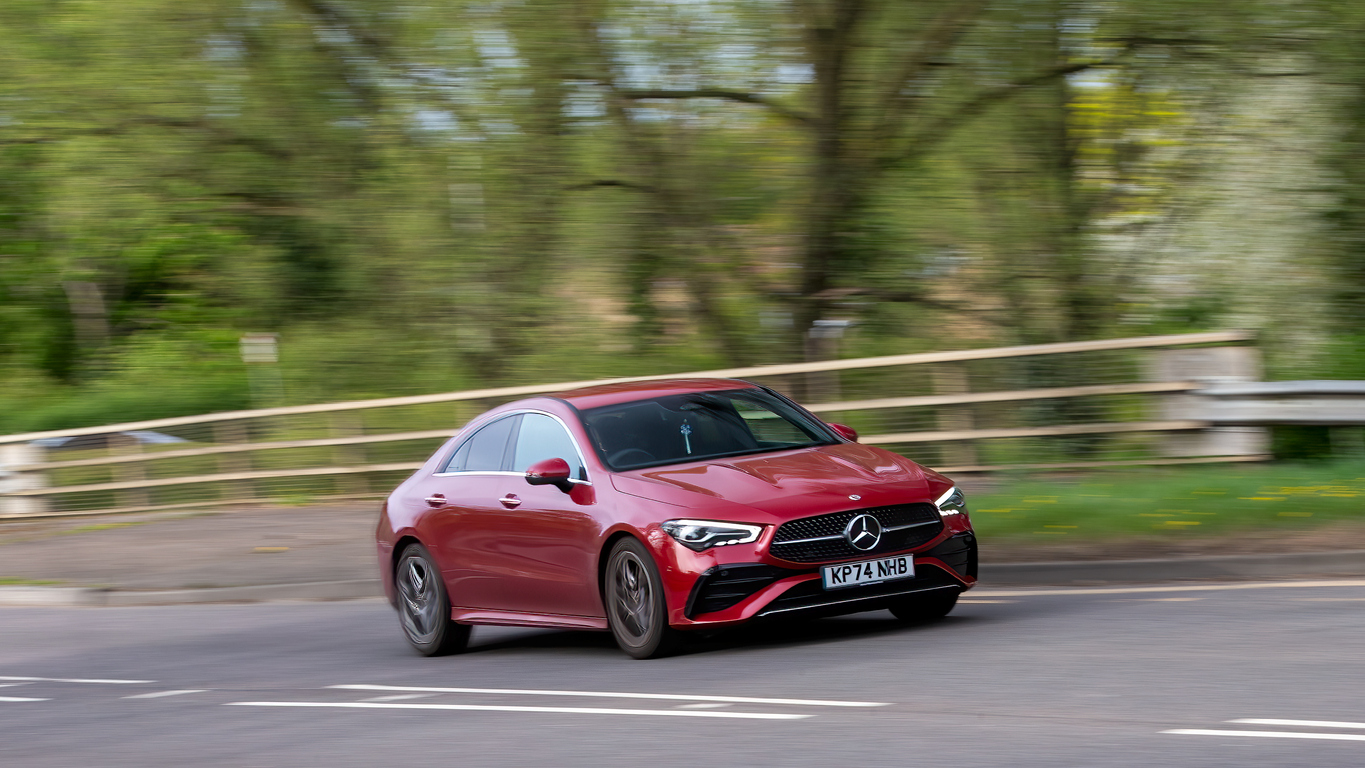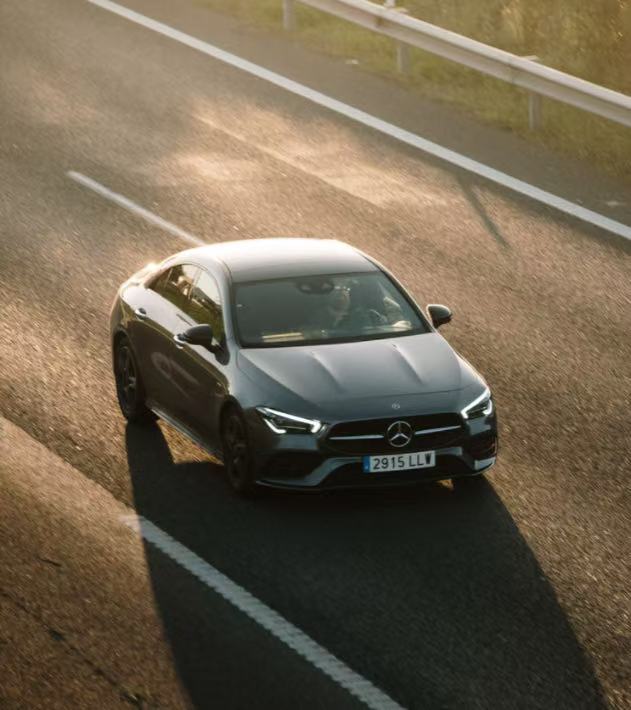


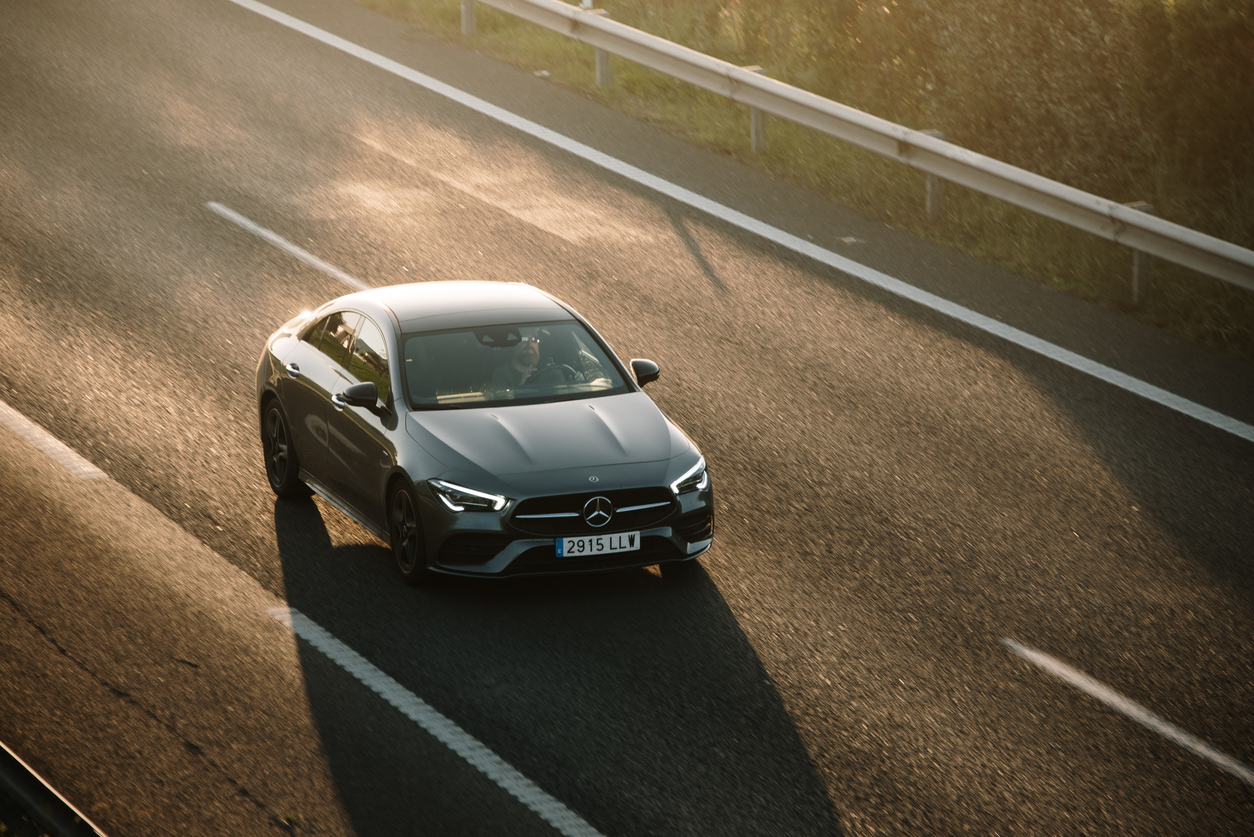
Some cars begin as transportation. The Mercedes-Benz CLA begins as projection.
Before you get to price, rear-seat space, ownership logic, or whether it makes rational sense at all, the CLA has already done what it was designed to do. It has caught your eye. The low roofline, the frameless doors, the taut silhouette, the glow of the cabin at night, the very specific promise of looking polished without looking loud. It does not really present itself as transportation. It presents itself as a version of you. Slightly sharper. Slightly more edited. Slightly more fluent in the language of modern luxury.
That instinct is not accidental. It is measurable.
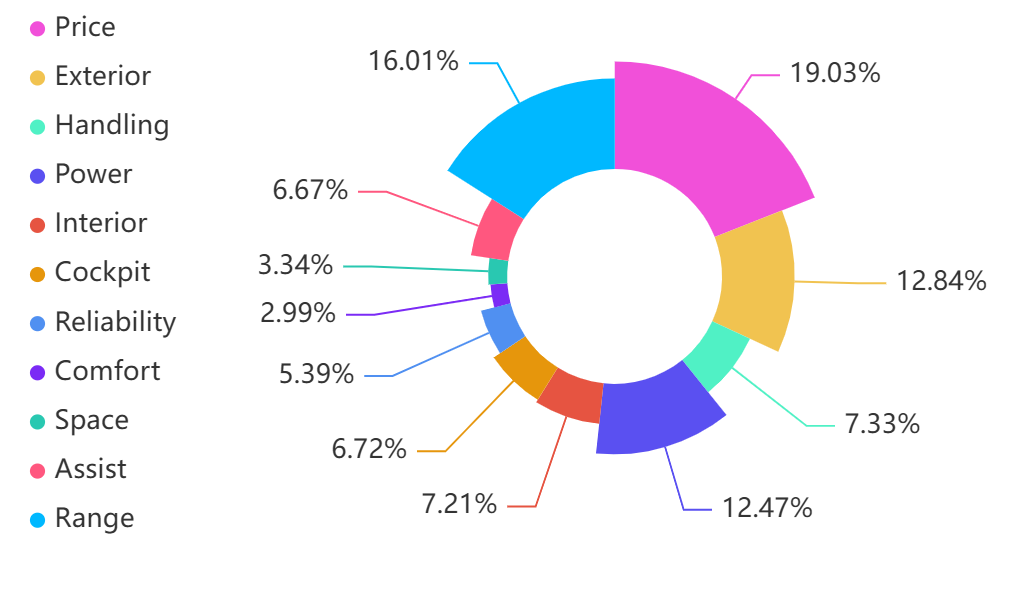
In the positive review breakdown we shared, Price leads at 19.03%, followed by Range at 16.01%, Exterior at 12.84%, and Power at 12.47%. That tells a very clear story. People are not falling for the CLA because it is merely competent. They are responding to the impression that it offers a premium look, strong badge value, and enough performance and range language to make the package feel emotionally complete. Even its smaller positive categories such as Interior at 7.21%, Handling at 7.33%, Cockpit at 6.72%, and Assist at 6.67% contribute to the same effect. The car is good at creating a total atmosphere of modern desirability.
Positive Reviews
The CLA does not only sell a car. It sells the feeling that you have already entered a better-edited life.
That is also what makes it such a revealing object. Because the CLA’s problem is not that it fails to attract people. If anything, it succeeds too quickly at that part. It understands exactly how contemporary desire works. It gives you the right silhouette, the right amount of gloss, the right amount of screen, and the right kind of premium restraint. It knows how to look expensive in a way that feels controlled rather than loud. It knows how to read as taste.
The trouble begins when taste has to survive use.
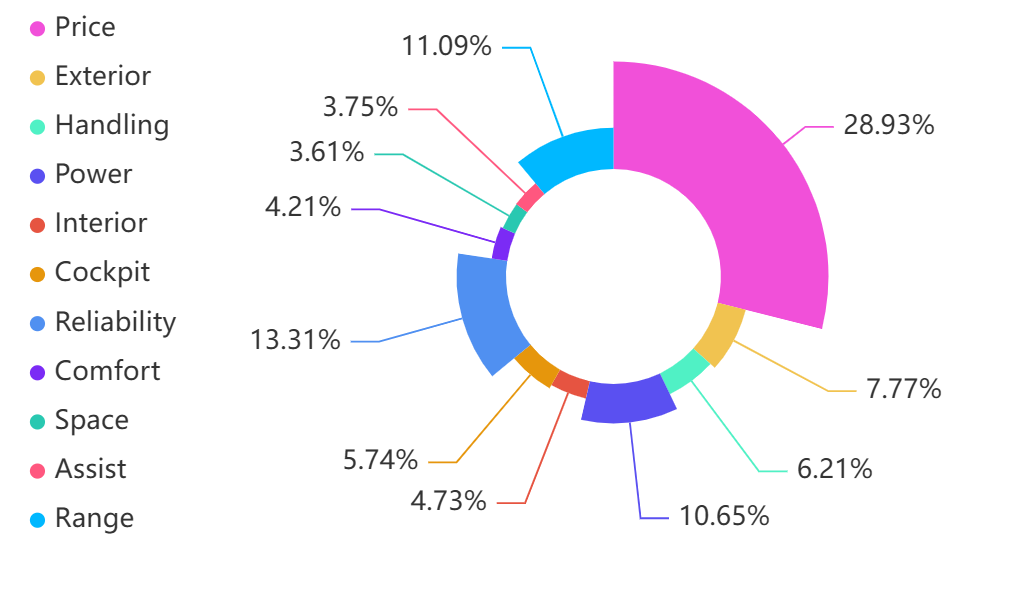
That is where the negative review chart becomes more interesting than any brochure. The complaints are not scattered randomly. They cluster. Price dominates the negative side at 28.93%, by far the largest share, followed by Reliability at 13.31%, Range at 11.09%, and Power at 10.65%. Even before you get to the smaller categories like Exterior at 7.77%, Handling at 6.21%, Cockpit at 5.74%, Interior at 4.73%, Comfort at 4.21%, Assist at 3.75%, and Space at 3.61%, the overall pattern is already clear. This is not a car people dislike because it lacks style. It is a car people begin to question once style has already done its job.
Negative Reviews
Its problem is not seduction. Its problem is what happens after seduction.
Take price. On the positive side, price is the single strongest source of praise at 19.03%, which suggests that many people still read the CLA as a relatively attainable entry into Mercedes luxury. That makes sense. It has exactly the right kind of visual polish to feel like a “smart” buy, a compact luxury object that looks more expensive than it is. But on the negative side, price explodes to 28.93%. That is not a mild hesitation. That is the dominant complaint. Which means the very same category helping to sell the fantasy is also the category most likely to break it.
That tension is deeply contemporary. Luxury today is no longer judged only by whether it feels desirable at first glance. It is judged by whether it remains convincing after the invoice, the daily drive, the compromises, and the ownership anxiety begin to settle in. A beautiful object can still win the eye immediately, but if the price starts to feel harder to justify than the mood it created, the object changes meaning. It stops feeling quietly luxurious and starts feeling slightly over-scripted.
A luxury object becomes vulnerable the moment its atmosphere costs more than its logic can carry.
Range and power tell a similar story. They perform strongly on the positive side, at 16.01% and 12.47%, which means they are important to the aspirational package. People like the sense of movement, capability, and ease those attributes suggest. But both become more unstable on the negative side, where Range rises to 11.09% and Power to 10.65%. That suggests expectations are being set high and then revisited under real use. In other words, these are not categories where the CLA is irrelevant. They are categories where it becomes negotiable.
The same is true, though less dramatically, of reliability. It accounts for only 5.39% of the positive conversation but jumps to 13.31% on the negative side. That gap matters because reliability is never just a technical issue in a premium product. It is emotional. A luxury car can be forgiven for being expensive, but it is much harder to forgive if ownership starts to feel uncertain, fiddly, or expensive in the wrong way. Reliability is what turns glamour into administration, and no glamorous object survives that shift gracefully.
Luxury can absorb a lot. It struggles to absorb doubt.
The smaller categories reveal something subtler. Exterior still performs better positively than negatively, with 12.84% positive versus 7.77% negative, which confirms that the CLA remains visually successful even among critics. Interior also does relatively well, with 7.21% positive against 4.73% negative. The car still looks right. It still presents well. That is not where the real damage happens. The damage happens in the categories that emerge slowly through repetition. Price. Reliability. Range. Power. These are categories you do not evaluate in the first few minutes. These are categories that reveal themselves over time.
Even comfort and space, though smaller in share, tell the same story. Comfort sits at only 2.99% positive and 4.21% negative, while Space is 3.34% positive and 3.61% negative. Neither dominates the conversation, but both lean slightly toward dissatisfaction. That is exactly how certain compromises behave in design-led products. They do not always produce outrage. They produce a low, accumulating sense that the object may be more resolved visually than physically.
The body notices what the eye is willing to forgive.
That may be the most revealing thing about the CLA. It captures a very specific tension in contemporary luxury culture. On the surface, it aligns perfectly with the codes people say they want now: restraint, polish, compactness, and the lower-volume status language of quiet luxury. It does not scream. It signals. It does not overstate. It implies. It is beautifully trained in modern aspiration.
But quiet luxury only works when the object feels coherent. It has to look refined and live refined. It has to make sense after the first impression has faded. It has to feel like something you do not have to keep explaining to yourself. Once the customer begins doing too much interpretive labor on behalf of the object, the object becomes less elegant, no matter how elegant it looks.
That is where the CLA starts to feel less like a straightforward success story and more like a case study in post-quiet-luxury anxiety. It is still very good at generating desire. But desire no longer ends the conversation. Buyers are more exacting now. They still want beauty, brand, and atmosphere, but they also want those things to survive contact with daily life.
Today’s luxury is not judged by how quickly it seduces you. It is judged by how little explaining it requires once you bring it home.
So the CLA is not unsuccessful. That would be too simple. It is more revealing than that.
It reveals how modern luxury now works, and where it begins to fail. It shows how strongly people still respond to image, mood, badge, and beautifully controlled form. But your chart also makes something else unmistakable: once the CLA moves from fantasy into lived experience, the conversation shifts sharply toward cost, trust, and long-term conviction.
It still knows how to make people want it.
The harder question is whether it knows how to stay wanted.