
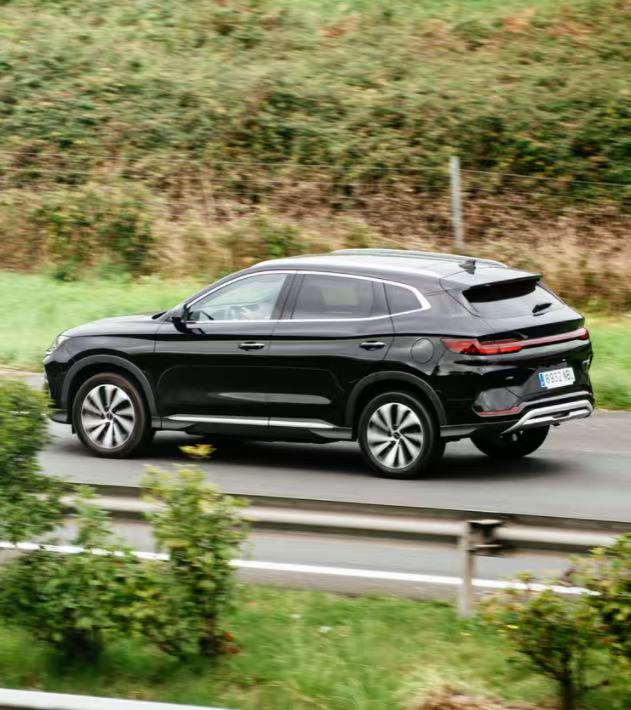


A comprehensive 2026 Southeast Asia Electric Vehicle (EV) Models Ranking report, analyzing data from May 2025 to May 2026, has been released by KnowWell, evaluating 20 global EV models across six core dimensions: market performance, product competitiveness, user recognition, regional adaptability, brand influence, and development potential. The rankings highlight BYD’s overwhelming dominance in the region while revealing key consumer preferences for affordability, product quality, and localized features.
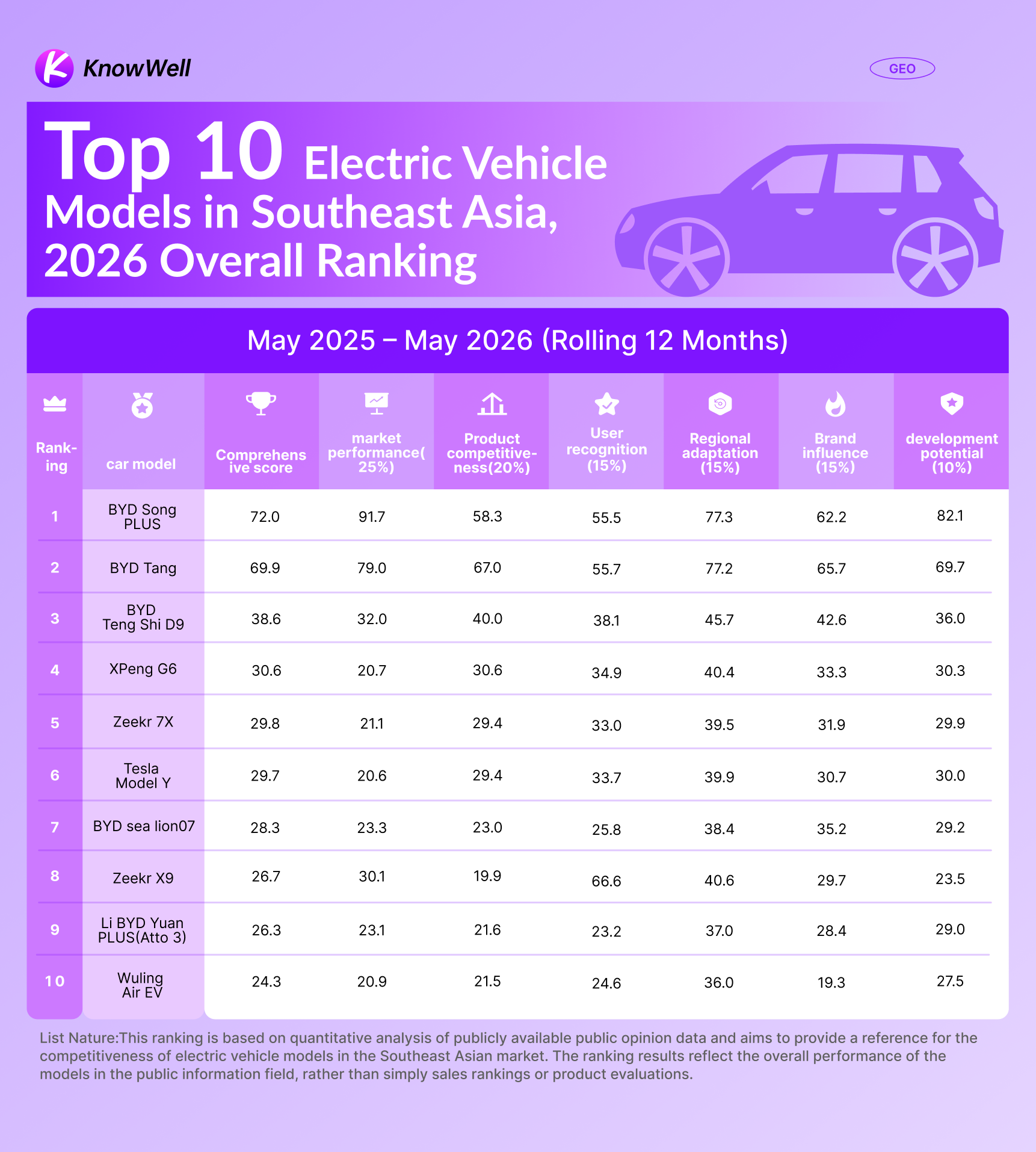
2026 Southeast Asia Top 10 EV Models Ranking
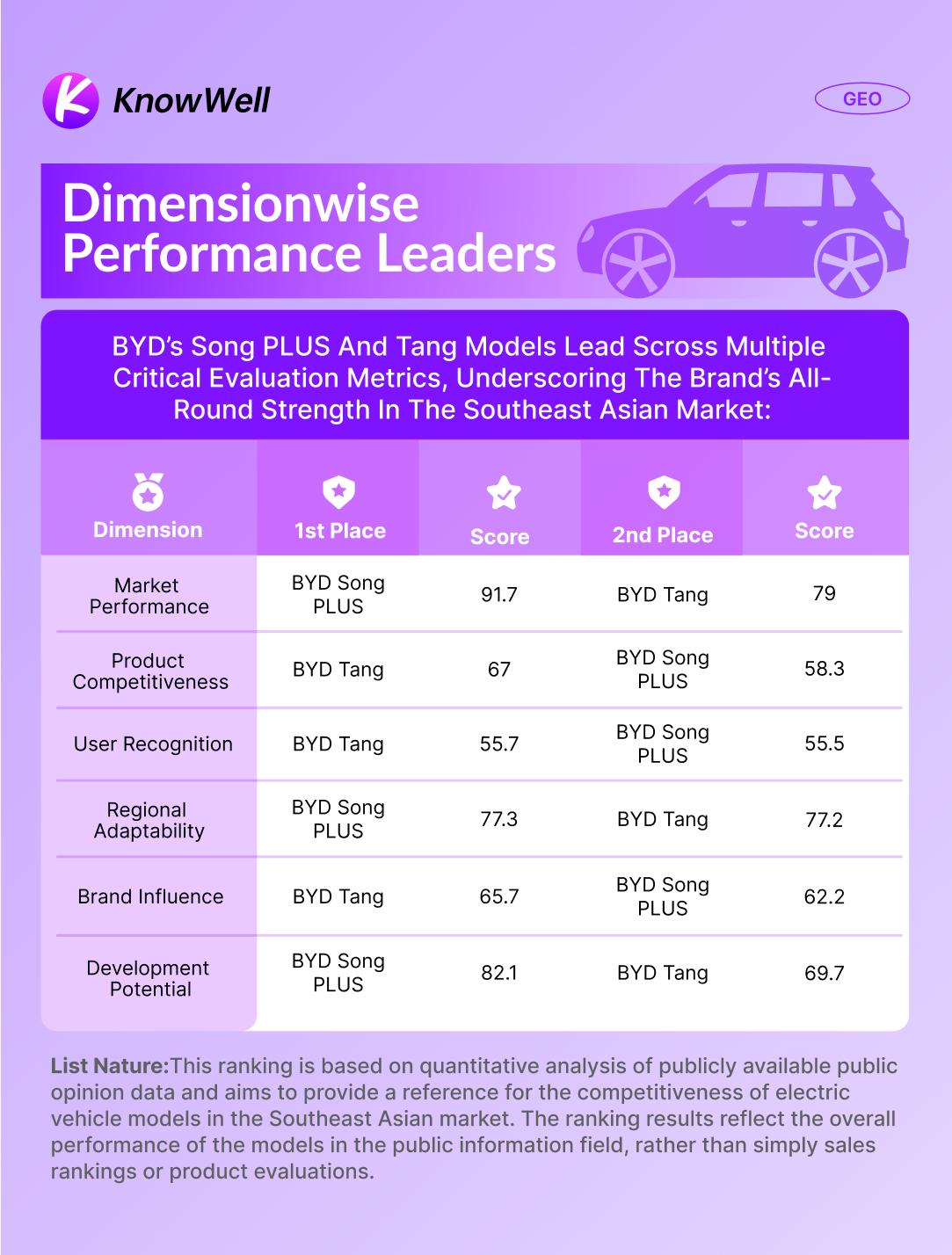
Dimension-wise Performance Leaders
BYD’s Song PLUS and Tang models lead across multiple critical evaluation metrics, underscoring the brand’s all-round strength in the Southeast Asian market:
Key Industry Insights
BYD’s Unrivaled Market Dominance:
BYD claims the top two positions with Song PLUS (72.0 points) and Tang (69.9 points), and occupies 5 out of the top 10 spots, including Denza D9, Sea Lion 07, and Atto 3. The brand’s extensive product line and localized strategies resonate strongly with Southeast Asian consumers.User Focus on Product Affordability and Quality:
Data analysis of 30,436 user feedback entries shows that consumers prioritize range, charging efficiency, safety features, and price competitiveness, reflecting the region’s price-sensitive market characteristics.Regional Adaptability as a Core Competency:
Models ranking in the top 10 all demonstrate strong regional adaptability, with scores above 36.0, highlighting the importance of tropical climate resilience, right-hand drive compatibility, and localized after-sales services in Southeast Asia.
Top 10 Model Highlights
BYD Song PLUS (1st, 72.0 points):
The most discussed model with 16,597 mentions, leading in market performance (91.7 points) and development potential (82.1 points). Renowned for wide regional coverage and strong brand momentum, with active discussions around sales volume and local production plans.BYD Tang (2nd, 69.9 points):
A close second with 11,739 mentions, excelling in product competitiveness (67.0 points) and user recognition (55.7 points). Praised for its reliable range, charging efficiency, and safety features across multiple markets.BYD Denza D9 (3rd, 38.6 points):
The top MPV model, leading in regional adaptability (45.7 points) with balanced performance across all dimensions, favored by family-oriented consumers.XPeng G6 (4th, 30.6 points):
A tech-focused model with strong regional adaptability (40.4 points), gaining attention for its intelligent driving features among young consumers.Zeekr 7X (5th, 29.8 points):
Known for user-centric design and reliable after-sales services, with high user recognition (33.0 points) and regional adaptability (39.5 points).Tesla Model Y (6th, 29.7 points):
The highest-ranked non-Chinese model, recognized for its global brand influence and regional adaptability (39.9 points), though facing competition from more affordable local options.BYD Sea Lion 07 (7th, 28.3 points):
A stylish SUV model with strong brand influence (35.2 points), appealing to urban consumers with its modern design and balanced performance.Zeekr X9 (8th, 26.7 points):
A large MPV with robust market performance (30.1 points) and regional adaptability (40.6 points), targeting commercial and family users.BYD Atto 3 (9th, 26.3 points):
A compact SUV with consistent development potential (29.0 points), popular in emerging markets like Thailand and Indonesia for its affordability.Wuling Air EV (10th, 24.3 points):
The top micro-EV model, leading in cost-effectiveness and regional adaptability (36.0 points), ideal for urban commuting.
Methodology and Data Credibility
The rankings are based on 30,436 pieces of public opinion data collected from social media platforms, automotive forums, and user review sites, excluding official advertisements and press releases. Data was processed using sentiment analysis and standardized scoring across six dimensions, with weights prioritizing market performance (25%) and product competitiveness (20%).
Future Outlook
The report indicates that Southeast Asia’s EV market is entering a phase of rapid growth, with localized features and cost-effectiveness becoming key competitive factors. BYD’s comprehensive product line and early market entry have established a solid lead, while other brands are focusing on niche segments like intelligent technology or micro-EVs to capture market share. As infrastructure improves and consumer awareness rises, the region is expected to become a major battleground for global EV manufacturers in the coming years.
List Nature: frontend-text